.jpg)
In 2026, metadata is not documentation. Metadata is infrastructure.
As organizations embark on their journey to AI, distributed cloud, and hybrid ERP, data catalogs are becoming limited. Data catalogs describe data. Data catalogs don’t govern data.
Passive metadata is like a printed map.
Active metadata is like a GPS navigator that senses change, recalculates routes, and reacts in real-time.
Selecting the correct Active Metadata Platform is not a nice-to-have; it’s a must-have for an organization’s compliance, AI, and operational viability. In this blog, we will dive into how to evaluate an Active Metadata Platform and how ChainSys dataZense stands out as the gold standard for Active Metadata Management.
Where Metadata Fails in the Real World
Real-World Scenario 1: Schema Drift Breaks a Dashboard
In a complex enterprise environment with multiple systems and a centralized data lake, business users rely on daily dashboards for decision-making. A change in the data warehouse, a simple column rename, goes unnoticed.
The Shift: From Documentation to Activation
A decade ago, a data catalog was enough. You indexed assets, added business glossaries, and maybe drew lineage diagrams. That worked when systems were fewer, and changes were slower.
Today, data environments are dynamic:
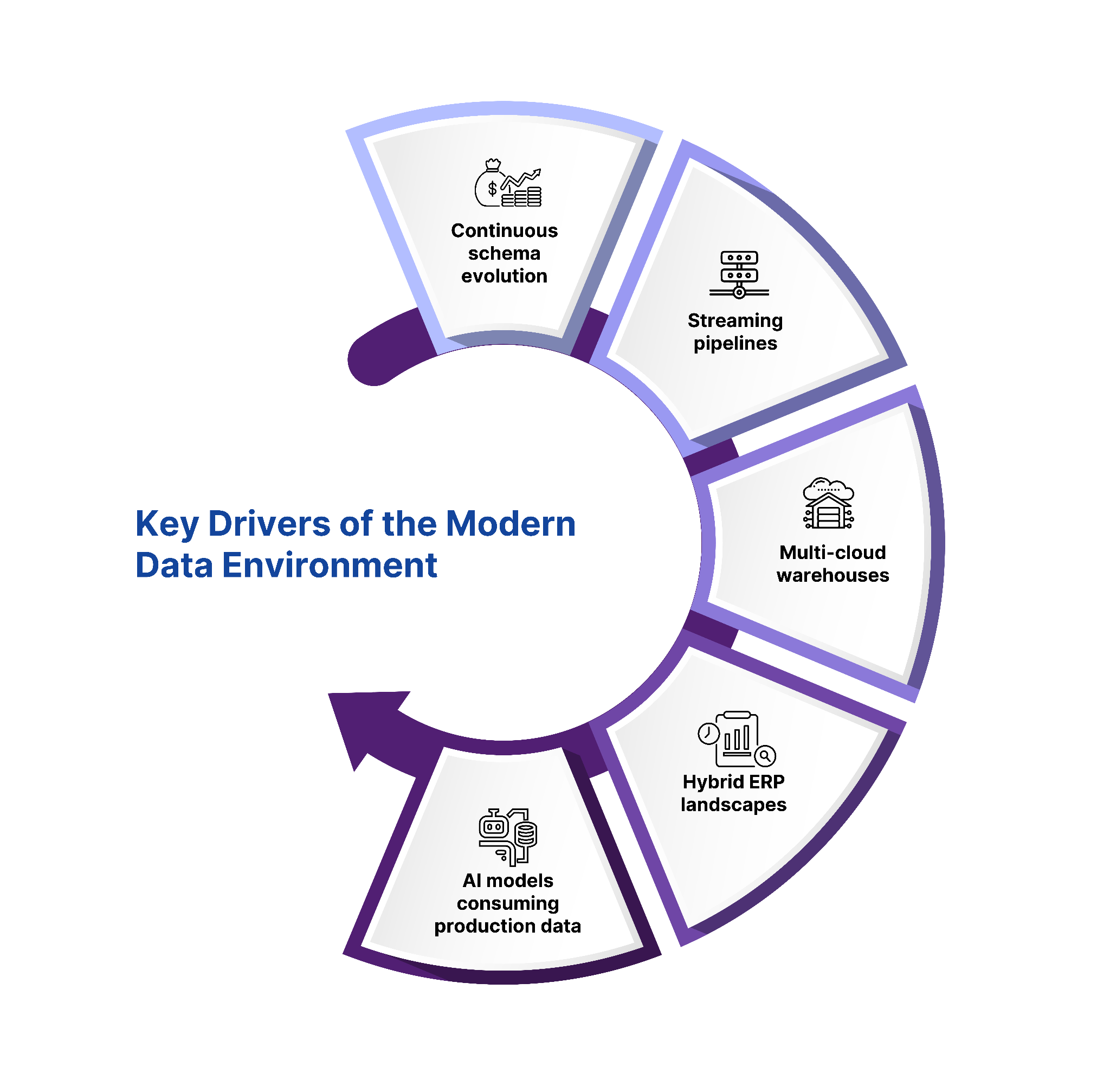
Static metadata cannot govern dynamic systems. An Enterprise Metadata Platform must now operate like a nervous system. It has to detect change, interpret it, and respond automatically. That’s what separates a passive repository from a true Metadata automation platform.
Data Catalog vs Metadata Platform: A Distinction That Matters
Legend:
The difference is structural.
A catalog provides visibility. An Active Metadata Platform provides control.
One documents the environment. The other governs it.
Key Criteria for Evaluating Metadata Management Tools
If you're in the process of choosing the Right Active Metadata Platform, here’s your structured evaluation guide.
Where Many Metadata Platforms Fall Short
Most Enterprise data catalog tools stop at visibility. They lack activation.
Some platforms focus heavily on technical metadata but ignore business context.
Others provide strong discovery but weak governance enforcement.
Very few truly function as a complete Data management platform that bridges discovery, lineage, governance, and automation in one cohesive system. And that’s where differentiation matters.
Why ChainSys dataZense Stands Out
When evaluating modern metadata solutions, one platform consistently checks every box: ChainSys dataZense.
dataZense is not just another Metadata platform. It is a fully integrated Enterprise Metadata Platform built for active governance, automation, and intelligence.
Let’s break down why it qualifies as the Best active metadata platform for enterprises.
From Visibility to Execution
Most platforms stop at visibility. They help teams discover datasets and document definitions. dataZense moves beyond visibility into execution. It continuously harvests metadata across cloud and hybrid environments. Structural changes are synchronized in real time. Lineage updates dynamically. Impact analysis becomes immediate rather than reactive. Metadata becomes operational intelligence, not documentation.
Governance That Operates, Not Just Observes
In many environments, governance exists as policy documents and periodic reviews.
With dataZense, governance is embedded into the metadata layer itself.
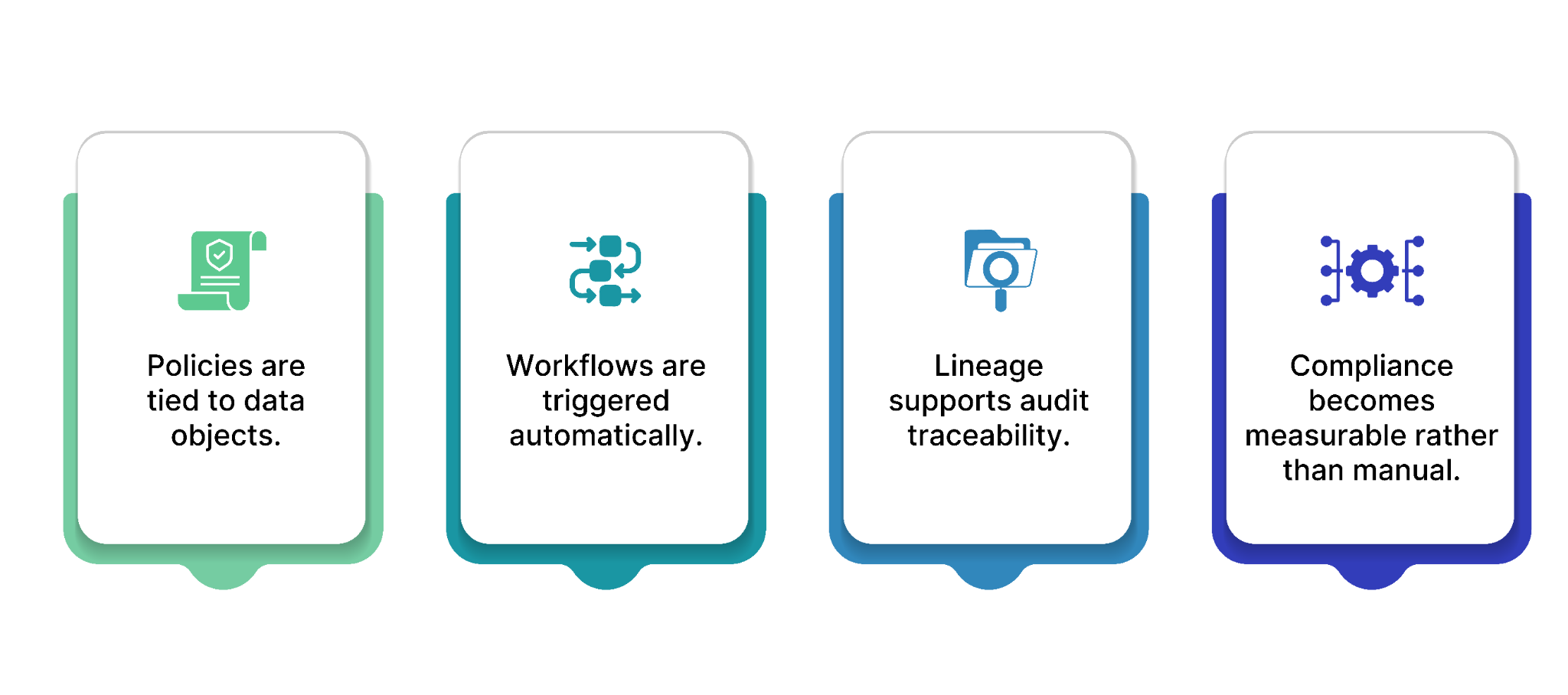
This is what an enterprise-ready Active metadata platform for data governance should deliver: governance that operates continuously.
Lineage as a Control Mechanism
End-to-end traceability is not simply a diagram. In complex ecosystems spanning data lakes, warehouses, ERP systems, and analytics platforms, lineage becomes a control surface.
dataZense provides deep, cross-platform Data lineage, including transformation visibility and business glossary alignment. When schemas shift or pipelines change, downstream impact is visible immediately. That capability protects analytics integrity and strengthens regulatory readiness.
Intelligence Built into the Metadata Layer
Modern enterprises require metadata to adapt as environments evolve. dataZense incorporates AI-powered metadata management to support:

This ensures metadata quality improves over time rather than degrading under complexity. AI is not layered on top. It is integrated into the metadata lifecycle.
Designed for Cloud-Scale Complexity
Today’s environments rarely sit within a single system boundary. dataZense operates as a scalable Active metadata platform for cloud data environments, supporting:
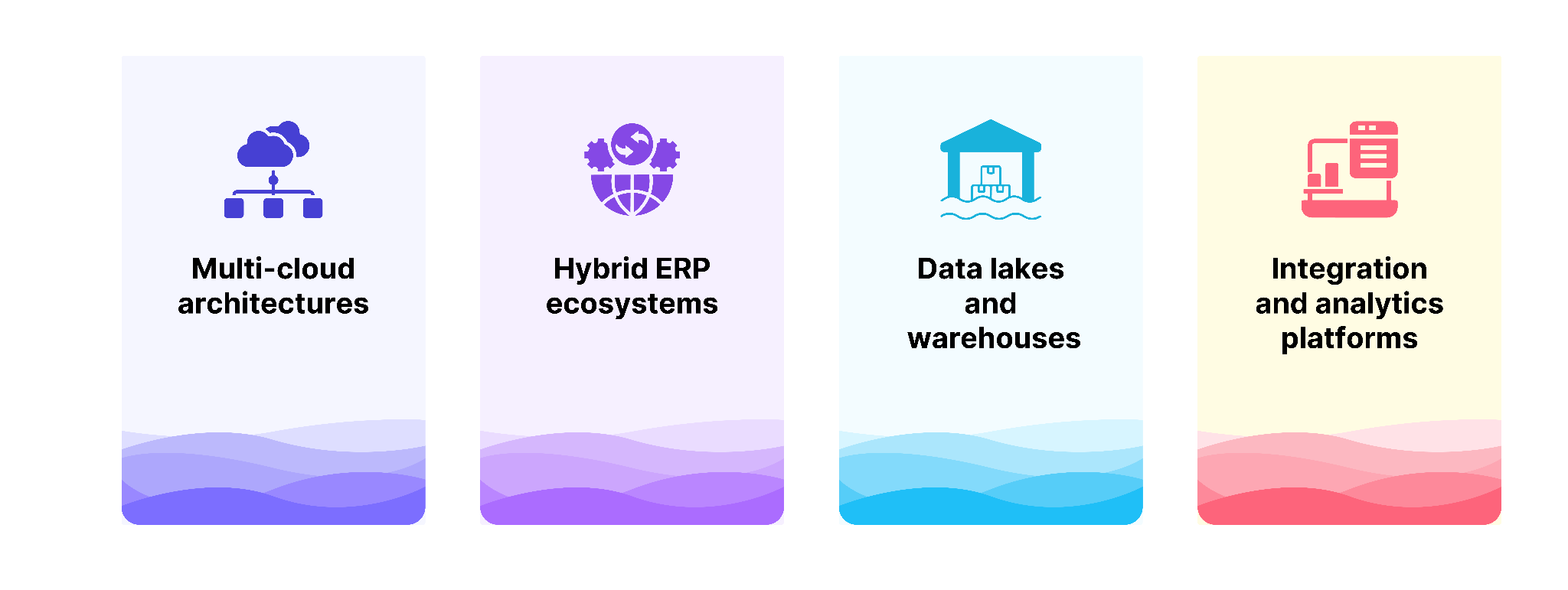
It aligns naturally with intelligent data fabric strategies, enabling metadata to flow across distributed systems without fragmentation.
Beyond the Catalog Model
While dataZense includes full Data discovery capabilities, it is not limited to catalog functionality.
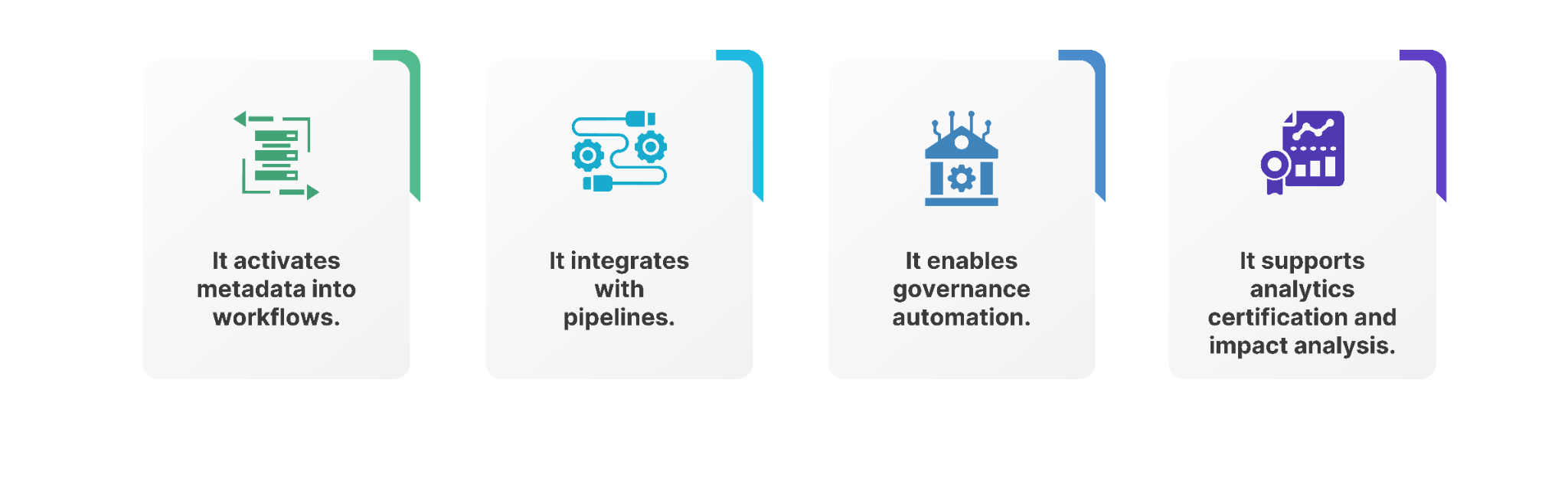
The difference is structural. A catalog documents the past. An Active Metadata Platform governs the present.
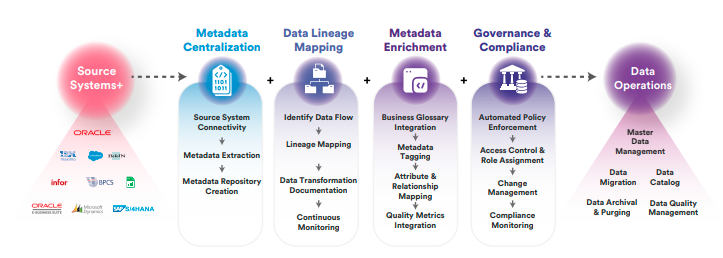
The ChainSys Active Metadata Management Approach
It’s Time to Activate Metadata
Metadata can no longer sit on the sidelines as documentation. In modern enterprises, it must operate as a living control layer, continuously capturing change, understanding data relationships, and driving governance, lineage, and trust in real time.
At ChainSys, we believe Active Metadata Management is the foundation of scalable AI, resilient governance, and cloud-ready data ecosystems. If you're ready to move beyond static metadata and build an intelligent, enterprise-grade metadata layer, the next step is clear.
Download our eBook on Active Metadata Management and discover how to turn metadata into a dynamic engine for governance, automation, and trust.
Don’t just catalog your data.
Activate it.