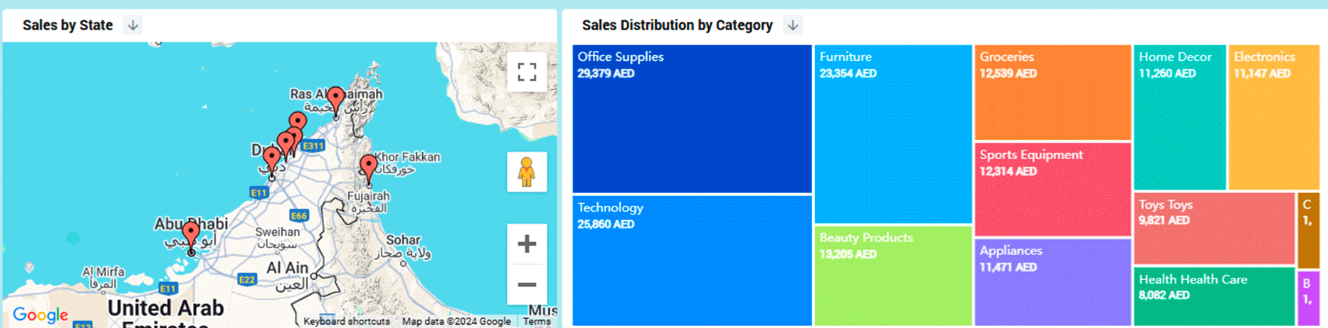
From Data Chaos to Clarity: How Data Analytics Delivers Measurable Business Value

Author:

Vishal & Suresh Rajput

Walk into any boardroom, and you’ll hear the same sentence: “We have the data”.

Revenue dashboards. Operational reports. CRM metrics. Supply chain numbers. Finance summaries. Data is everywhere.

But here’s the uncomfortable truth: Access to data does not automatically create data analytics business value.

Most organizations aren’t struggling with data collection. They’re struggling with clarity. They’re struggling to connect data to decisions. And more importantly, they’re struggling to prove data analytics ROI.

So let’s talk honestly about what separates companies that simply analyze data from those that unlock the real business value of data analytics.

What Data Chaos Actually Looks Like

Imagine this.

The CFO reviews quarterly revenue numbers.

  • Sales shows 12% growth.
  • Finance shows 6%.
  • Operations says the margin is shrinking.

Three reports. Three stories. One company. That’s not an analytics problem. That’s a data alignment problem. 

This is what data chaos looks like inside enterprises:
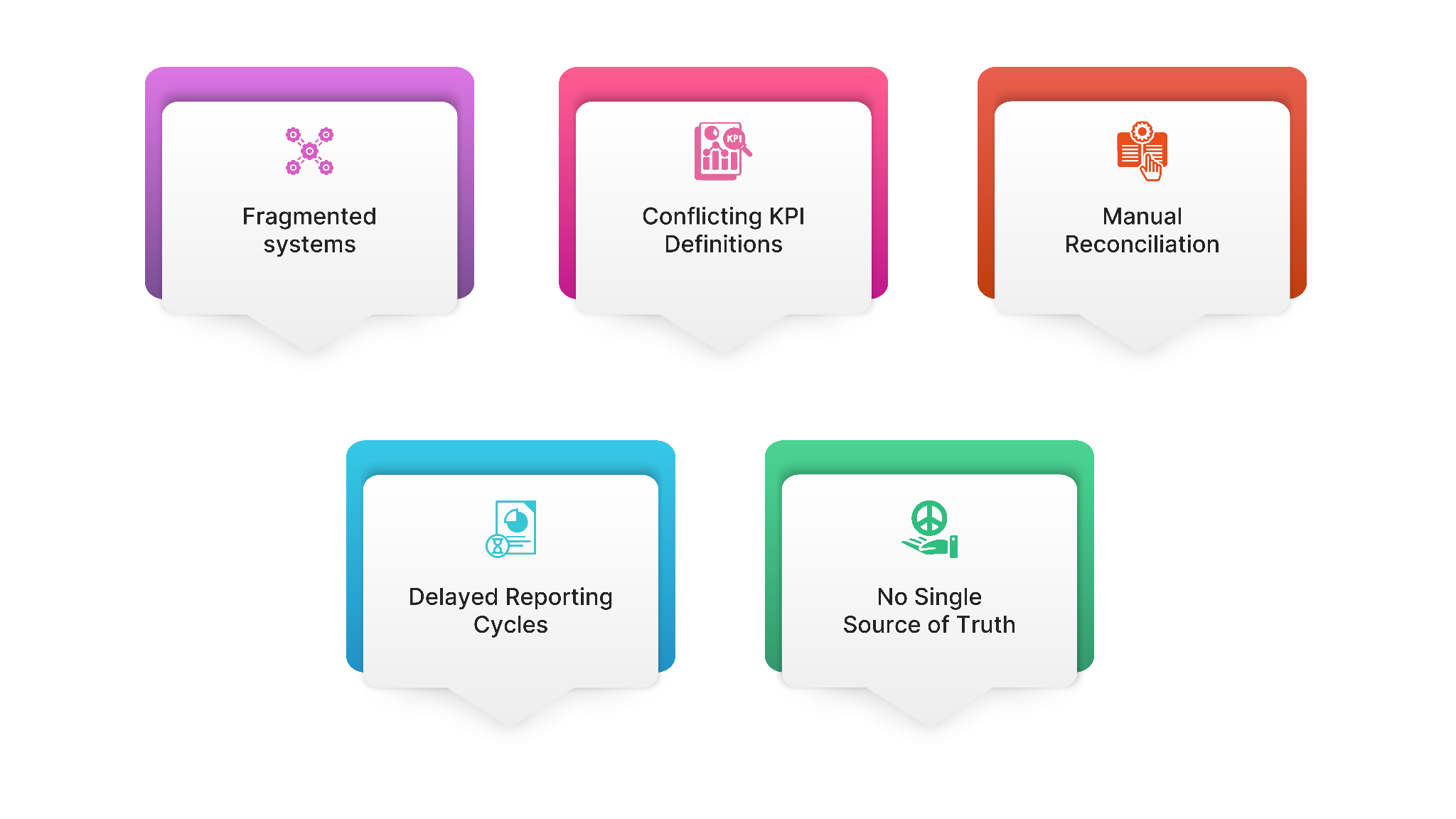
Without structure, analytics becomes noise. And noise does not create ROI.

When Data Becomes Insight
Raw data is just activity. Transactions. Clicks. Orders. Logs. Entries.

Insight is meaning.

Turning data into insights requires three things:
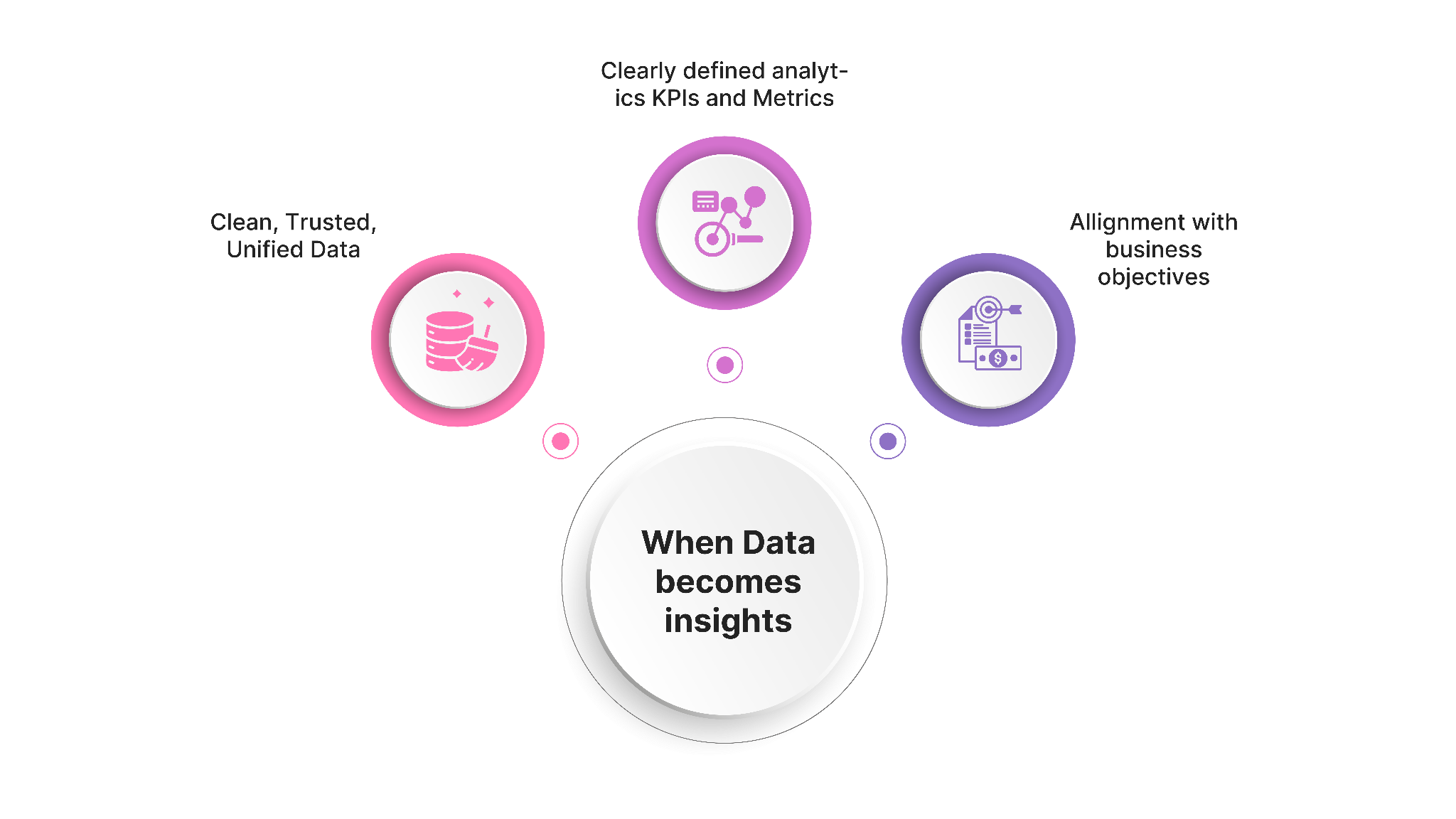
When these elements come together, something powerful happens.

  • Leaders stop reacting. They start predicting.
  • Managers stop guessing. They start optimizing.

That’s when data-driven business insights begin to influence revenue, cost, and performance.

Defining What “Value” Actually Means

One of the biggest gaps in analytics initiatives is measurement. Organizations invest heavily in tools, platforms, and teams. But few define how they will measure success.

If you want to derive actual business value from your data analytics investments, you have to define it first. Business value usually consists of four categories:

  • Revenue Growth: This is where data analytics for business growth becomes visible and tangible.
    • Finding new markets for customers
    • Increasing the rates of upselling and cross-selling
    • Improving pricing tactics
    • Accelerating cycles of going to market
  • Cost Optimization: In this case, margins are directly impacted by data analytics used to enhance business performance.
    • Cutting down on operational inefficiencies
    • Removing unnecessary procedures
    • Supply chains and inventory optimization
    • Automating manual reporting
  • Risk Reduction: Risk mitigation is often an underestimated part of data analytics ROI.
    • Finding irregularities or fraud
    • Ensuring adherence to regulations
    • Keeping an eye on operational risk
    • Increasing the precision of forecasts
  • Strategic Agility: This is where data intelligence for enterprises becomes a competitive advantage.
    • Faster scenario modeling
    • Real-time performance tracking
    • Improved forecasting
    • Better executive alignment

Measuring ROI the Right Way

Let’s talk numbers. If analytics cannot demonstrate measurable returns, it becomes an expense line instead of a strategic asset. Measuring the ROI of data analytics initiatives requires linking analytics outcomes directly to financial impact.

Here’s a simplified framework for data analytics value measurement:

Business Objective Analytics Initiative KPI Impact Financial Outcome
Improve Sales Predictive Lead Scoring +15% Conversion Rate Revenue Increase
Reduce Inventory Costs Demand Forecasting Model -20% Overstock Cost Savings
Improve Customer Retention Churn Analytics -10% Attrition Higher Lifetime Value
Optimize Operations Process Analytics -12% Cycle Time Productivity Gains

This is how analytics ROI becomes concrete. Not abstract. Not theoretical. Measurable.

When leadership can trace a dashboard insight to a balance sheet impact, business analytics stops being optional.

Real Data Analytics Use Cases That Prove the Point

 Let’s look at how this plays out across industries.

Industry Key Data Analytics Use Cases Business Impact
Manufacturing Predictive maintenance, production analytics, supply chain visibility
  • Reduced unplanned downtime
  • Improved production yield
  • Stronger on-time delivery performance
Retail Customer behavior analytics, inventory optimization, dynamic pricing
  • Higher customer retention and personalization
  • Fewer stockouts and excess inventory
  • Improved profit margins
Healthcare Clinical analytics, operational optimization, compliance monitoring
  • Better patient outcomes
  • Optimized resource utilization
  • Lower regulatory and compliance risk
Banking & Financial Services Fraud detection models, credit risk analytics, and customer segmentation
  • Reduced fraud losses
  • Smarter lending decisions
  • Increased cross-sell and upsell revenue
Utilities & Energy Demand forecasting, asset performance analytics, and outage prediction
  • Improved grid reliability
  • Reduced maintenance costs
  • Faster outage resolution

Bridging the Gap Between Insight and Impact

This is the point where many organizations pause.

  • They understand the value.
  • They see the potential.
  • But execution feels complex.

Integrating systems. Standardizing definitions. Governing data. Aligning KPIs. Measuring outcomes. Scaling analytics across departments. That’s not just a reporting challenge. That’s an enterprise transformation effort. And this is exactly where ChainSys dataZense makes the difference.

How ChainSys dataZense Moves Enterprises from Chaos to Clarity

ChainSys dataZense is designed to help enterprises transition from disintegrated analytics to organized and result-oriented data intelligence. It’s more than just a dashboard. It helps establish a governed and integrated analytics platform, specifically designed and developed to provide measurable business value.

Here’s how dataZense helps your data analytics strategy:

  • Unified Data Platform: dataZense integrates ERP, CRM, supply chain, financial, and operational data into a single governed platform, thereby removing silos and establishing a single source of truth for enterprise data analytics solutions.
  • KPI-Linked Analytics Platform: Analytics is directly linked to business outcomes. Revenue expansion, cost savings, risk management, and operational effectiveness are measured using well-defined KPIs, thereby making an impact measurable.
  • Integrated Data Governance and Validation: Trusted data is the foundation for data-driven decision-making. dataZense integrates data governance and validation mechanisms to ensure accuracy, consistency, and reliability across the enterprise.
  • Measuring Value Creation: Every initiative is linked to financial outcomes from day one. Insights are linked to performance improvements, and dashboards help measure analytics ROI.

Key Differentiators of dataZense

Differentiator Traditional Tools dataZense
Time to Insight Slow, due to data preparation delays 50–70% faster insights
Automation Manual, script-heavy processes 80–90% automated
Data Accuracy Inconsistent across systems 50–80% fewer errors
Business Alignment Reports not tied to outcomes KPI-driven, ROI-focused
Scalability Siloed across teams Unified enterprise view

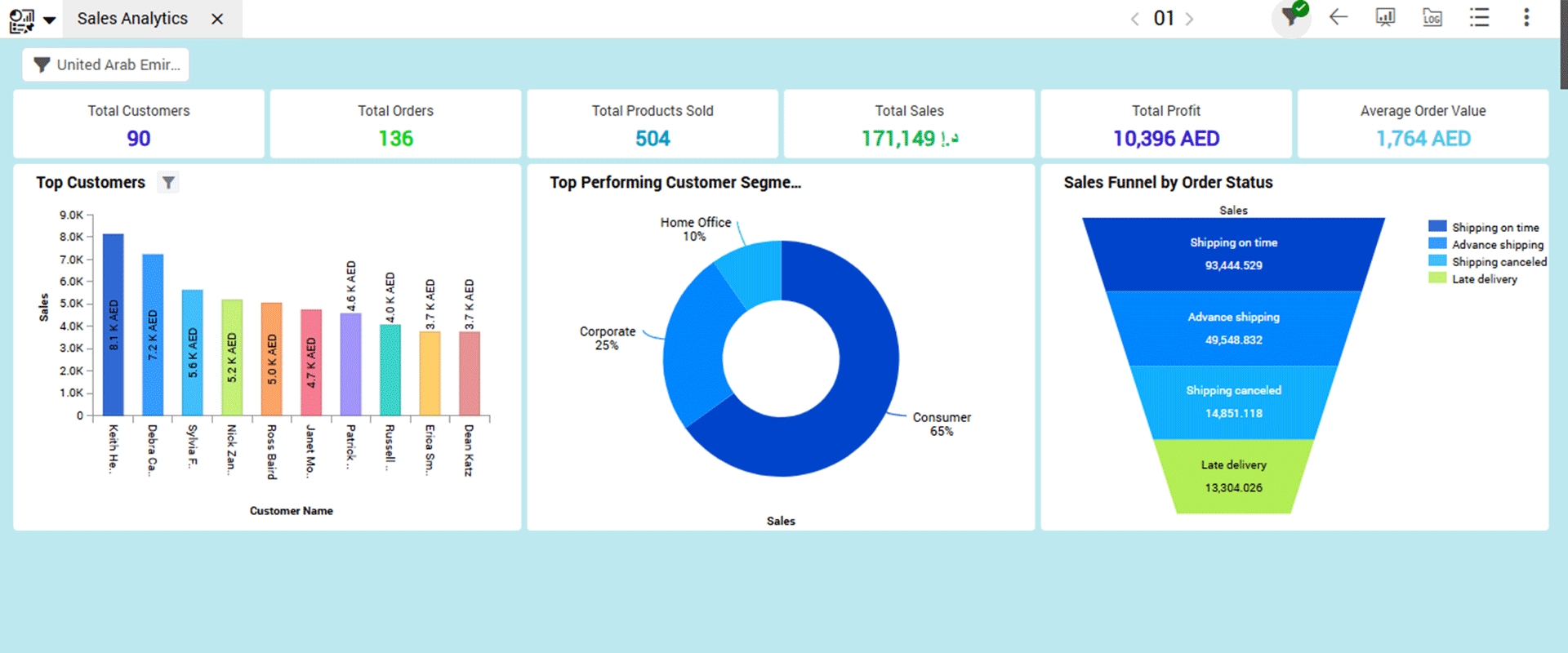
dataZense in Action
Sales Analytics Dashboard  - A Product View 
From Data to Decisions to Growth

Data alone doesn’t create growth. Insights alone don’t create ROI.

Alignment does. Measurement does. Execution does.

The journey from data chaos to clarity requires more than tools. It requires a structured analytics strategy, a unified intelligence framework, and a relentless focus on measurable outcomes. At ChainSys, we help enterprises transform raw data into business value. Not conceptually. Not theoretically. Measurably. If your organization is ready to stop reporting and start accelerating performance, it’s time to rethink your analytics foundation. 

The question is: are you in control of the data or reacting to it?

It’s time to move beyond reports and start driving measurable outcomes.

Connect with ChainSys today and turn your data into a competitive advantage, faster, smarter, and at scale.


Vishal
Solution Consultant
Linked In
Suresh
Marketing Head
Linked In