Microsoft Dynamics 365 → Oracle Fusion Cloud Migration: A CIO’s Guide to Success
Author:
Amarpal Nanda & Mahek Sandhu Bonnie
Many companies rely on Microsoft Dynamics 365 for solid ERP, CRM, and day-to-day operations. Still, as needs grow for better scaling, smoother connections, more intelligent analytics, and one-cloud setups, Oracle Fusion Cloud ERP steps up as a strong choice. Moving from Dynamics 365 to Oracle Fusion Cloud brings real advantages, though the job stays tough. CIOs have to map out a clear plan, monitor risks, pull teams together, guard data quality, and deliver real business wins all at once. This keeps the whole shift on track without big surprises.
This guide runs through:
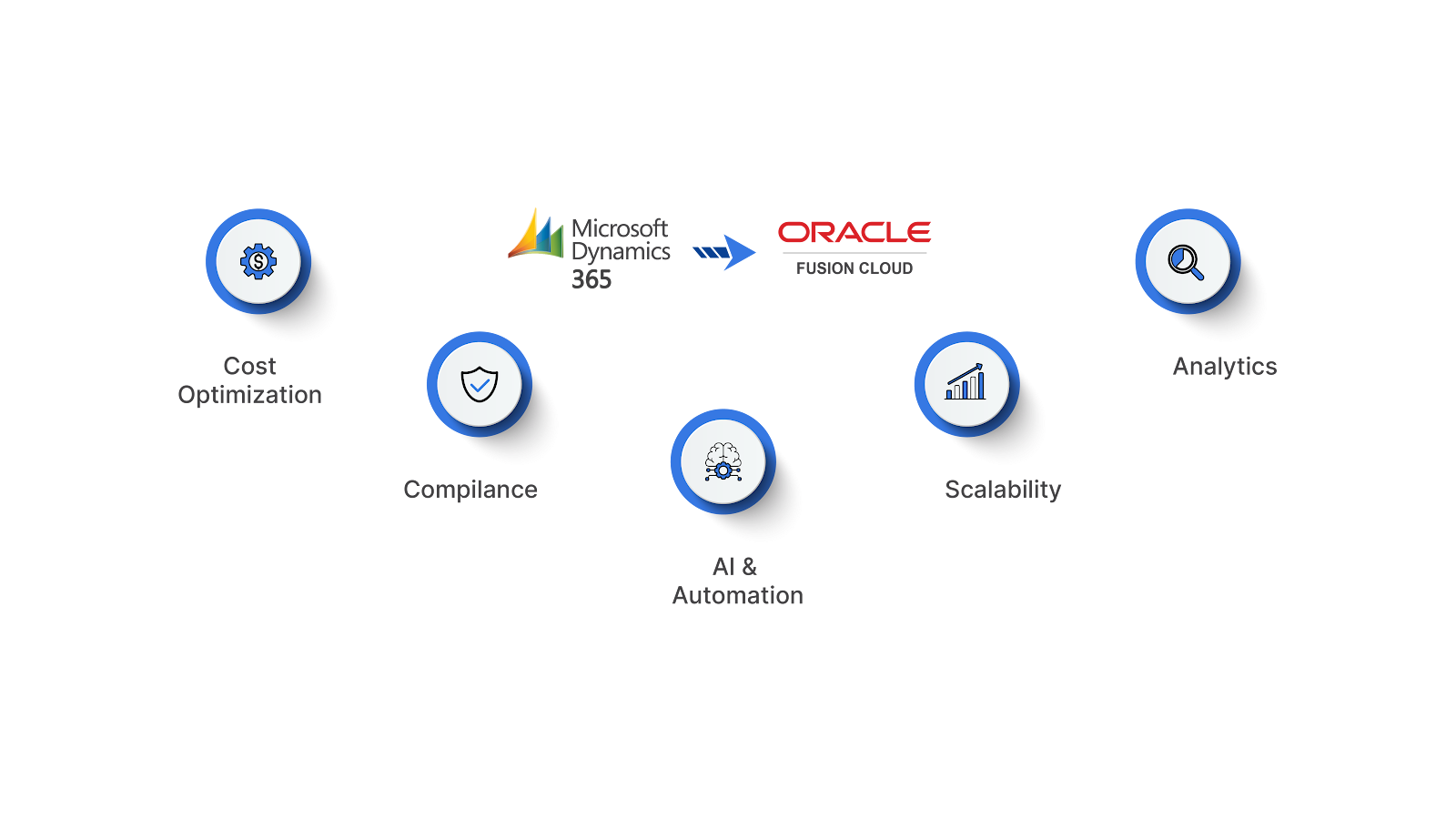
Why firms leave Dynamics 365 for Oracle Fusion Cloud
Main hurdles and ways to fix them
A clear, step-by-step path
Smart habits and risk cuts
How innovative/automated tools help (ChainSys included)
The case for it and how to measure wins
Why Move from Dynamics 365 to Oracle Fusion Cloud
Dynamics 365 works well, but plenty of big outfits now see Oracle Fusion Cloud as the better fit for today’s extensive, complex work. Top reasons:
One Cloud Base: Oracle’s complete set—Financials, Supply Chain, HR, everything—comes built to run together in the cloud, cutting clutter. This setup means fewer hand-offs between parts, so teams spend less time fixing breaks.
Big Scale & World Reach: Growing across borders? Oracle handles multiple currencies, entities, and rules right out of the gate. It adjusts on the fly for local taxes or reporting without extra code.
Sharper Work: AI, machine learning, and forecasts sit within core tasks, delivering automation and insights quickly. These tools spot patterns in sales or stock before people do, saving cash and time.
Gains don’t come free—expect downtime, team shifts, fresh training, maybe process rewrites. A CIO needs a whole playbook. Without it, minor oversights turn into long delays. Discover how ChainSys enables seamless cloud transformations.
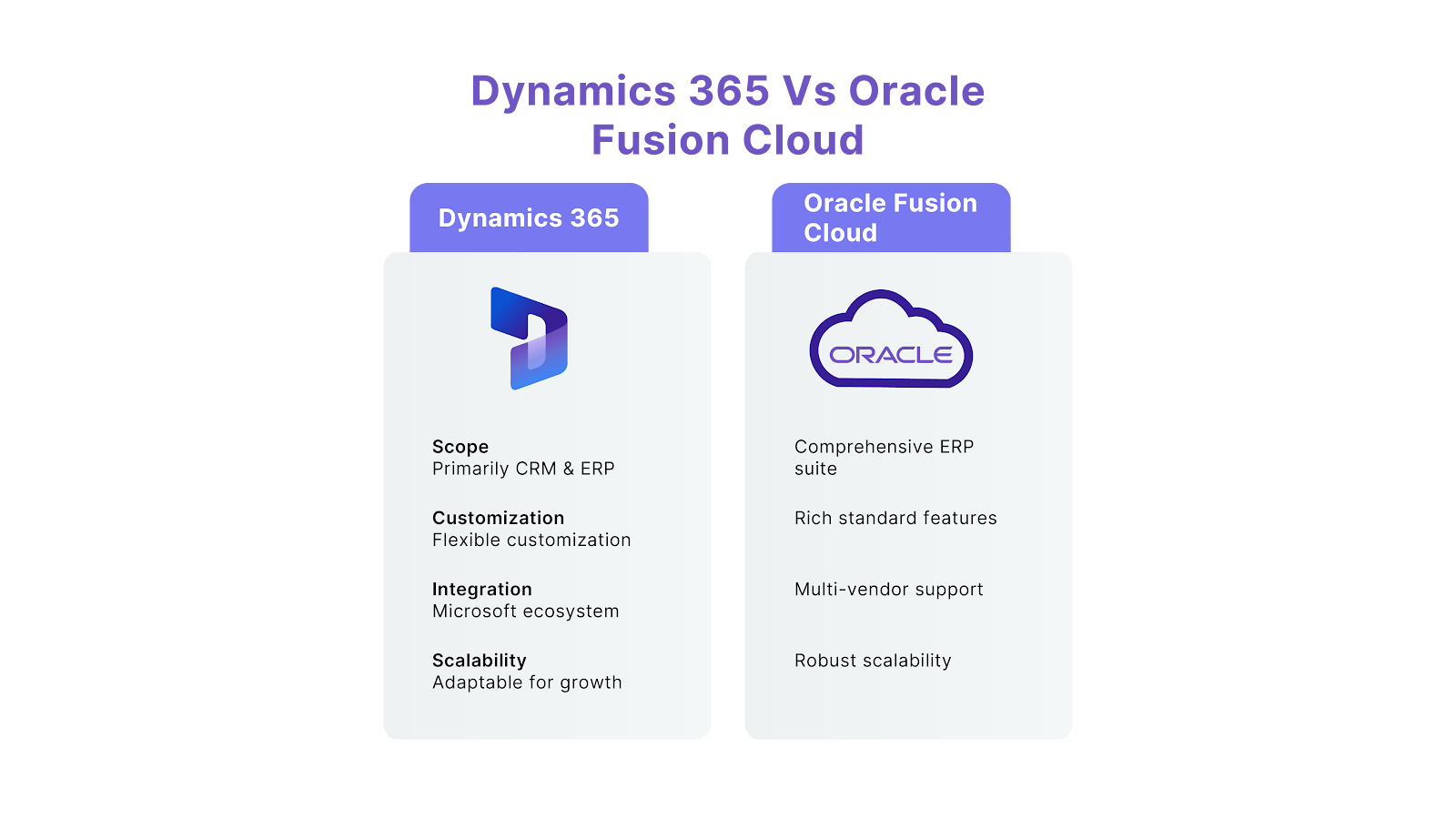
Dynamics 365 vs Oracle Fusion Cloud: Key Differences & Considerations
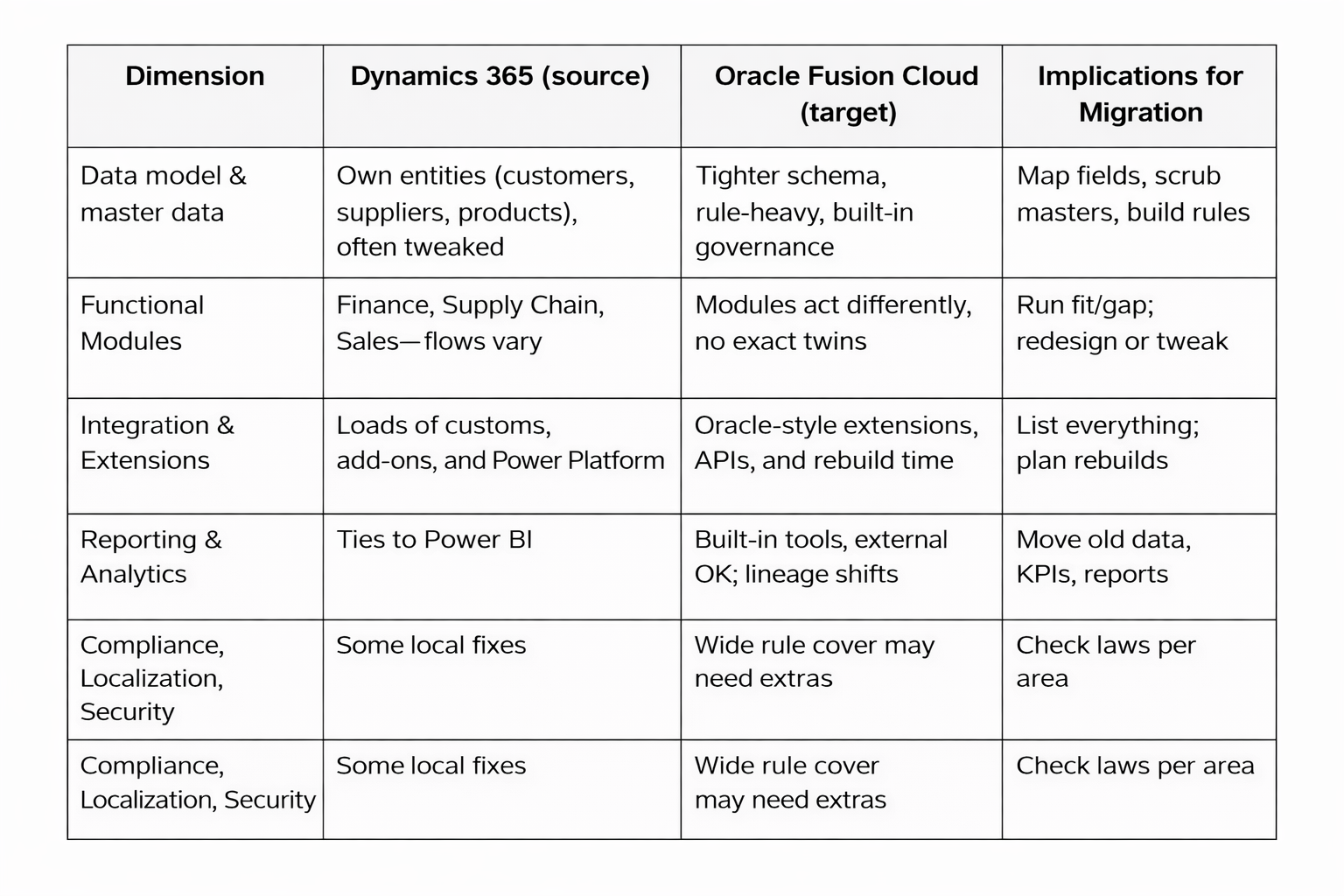
To plan a migration, you must understand how the two systems differ. Key areas to compare: Dynamics 365 vs Oracle Fusion Cloud: Key Differences & Considerations
Quick compare:
Know the gaps before you start. Learn how ChainSys bridges data models.
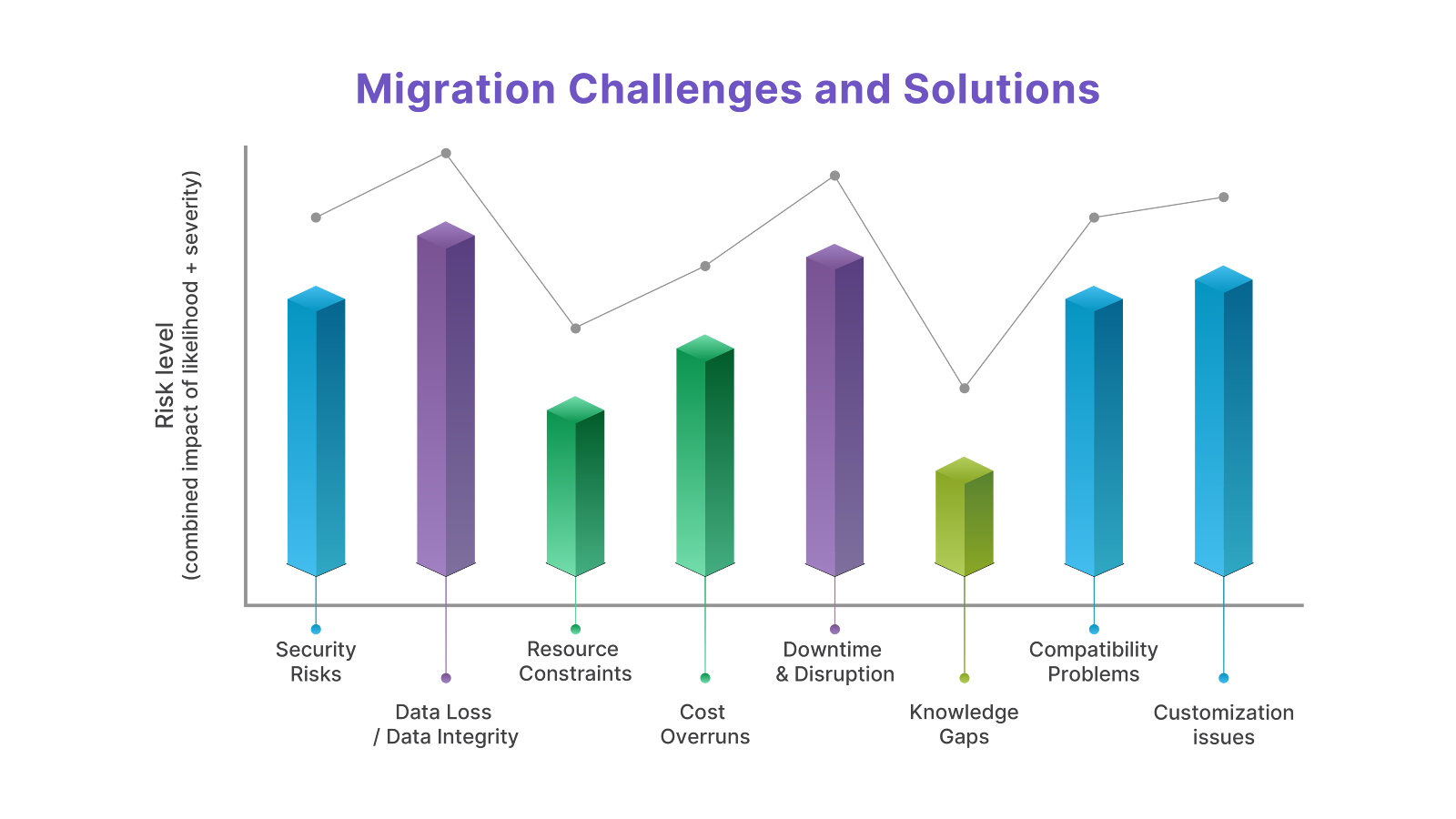
Common Migration Challenges & How to Mitigate Them
Common Migration Challenges & How to Mitigate Them
This isn’t a quick swap—it reshapes the business. Watch for these traps:
Data Quality and Mapping Issues Problem: Dynamics holds duplicates, gaps, and odd fields that clash with Oracle’s clean setup. Old entries from years back can hide in corners, causing loads to break. Fix: Clean first. Name stewards, grab tools like ChainSys dataZen to scrub, verify, and lock down a single truth source early. Run checks weekly to catch new junk.
Customizations and Integrations Problem: Years of workflows, plugins, and Power extras won’t jump over; outside links snap. One forgotten plugin can halt a whole department. Fix: Catalog all. Sort: copy, rebuild in Oracle way, or drop for standards. Remake links with APIs and middleware. Test each link alone first.
Change Management and User Adoption Problem: People know Dynamics; new screens spark pushback, slow work. Top performers might even look for other jobs if frustrated. Fix: Pull business in soon. Share demos, sandboxes. Teach why it’s better, not just how. Roll in chunks. Gather quick wins to show early.
ChainSys Capabilities & How They Support Migration
ChainSys tools knock out lots of pain. Standouts:
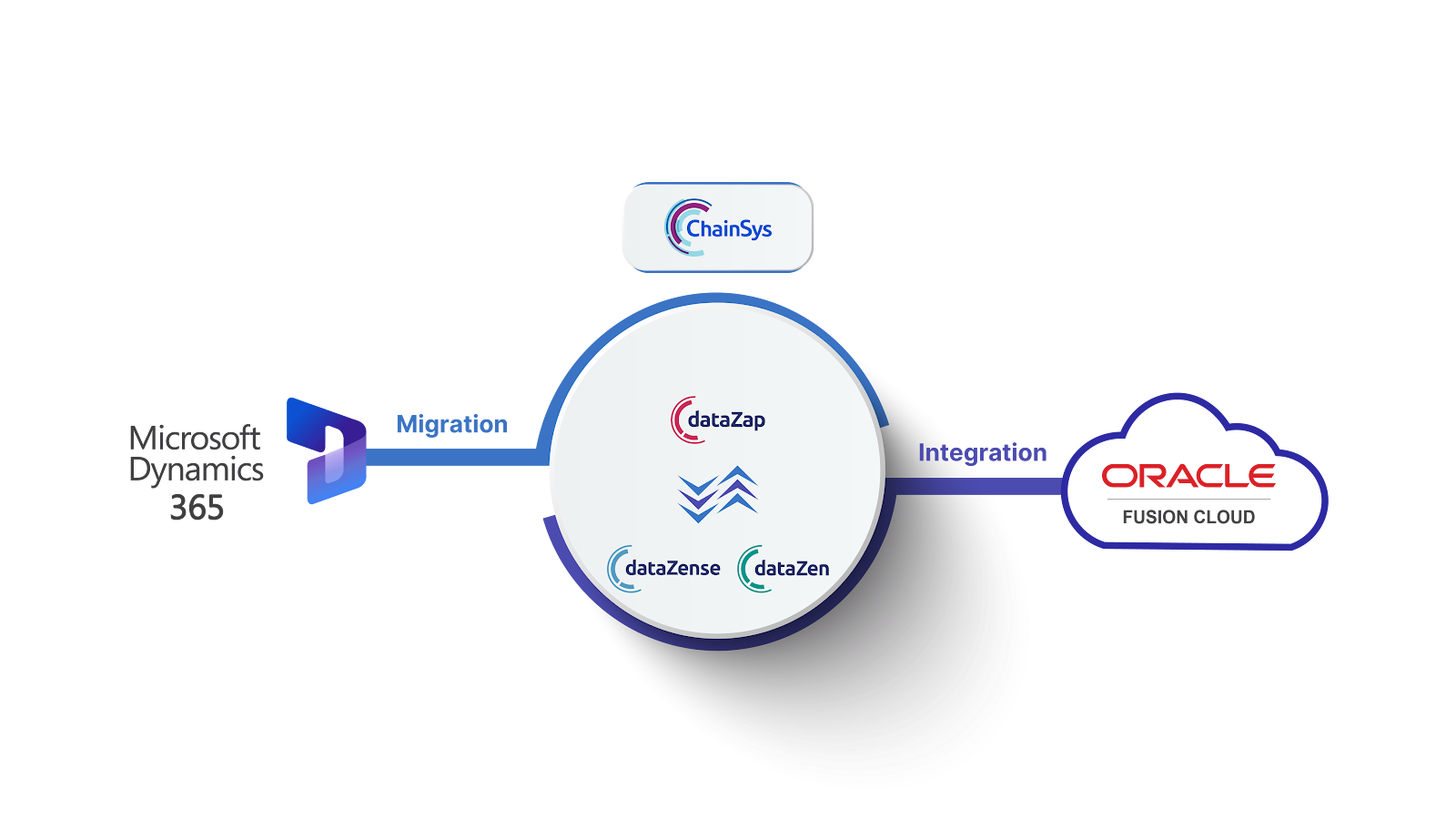
dataZap: Ready templates for Dynamics, Oracle, SAP—speeds pull, change, load, checks, matches. chainsys.com+3chainsys.com+3chainsys.com+3. You load once, tweak for regions, and are done.
dataZen: Cleans, governs masters, fixes quality. Get data ready.. It flags bad records before they cause failures.
Setup/Data Strategy: Moves configs (charts, orgs) plus data—no manual re-entry for account setups.
Metadata, Governance, Checks: Tracks flow, no loss, complete audits. Dashboards, pre/post match-ups.. Auditors love the trail it leaves.
Scale & Reuse: Handles phases, oversized loads, and many sources. One template works for ten countries with minor changes.
CIOs drop risk, move faster, keep data tight. Explore ChainSys data migration capabilities and whitepapers for in-depth insights.
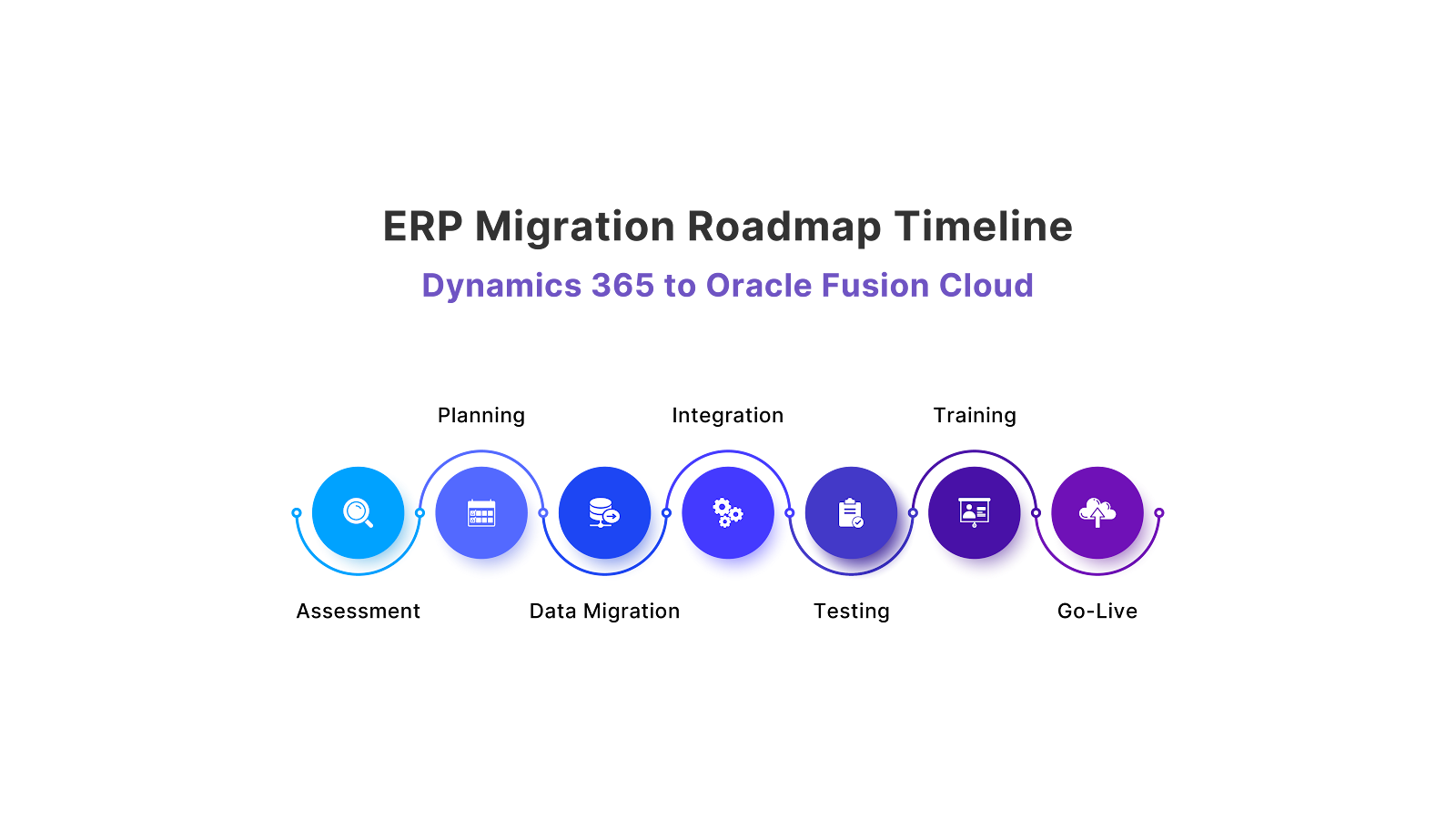
Step-by-Step Migration Roadmap for Dynamics 365 → Oracle Fusion Cloud
Here’s a structured roadmap you can adapt:
Tweak this path:
Phase
Key Activities
Deliverables / Outcomes
1. Strategy & Planning
Case: costs, wins, ROI, risks
Line up teams: IT, legal, finance
Check now-state: customs, links, data size, master data health
Set target: modules, flows, gaps
Solid business case
Risk list
Timeline & budget
High-level design and scope
2. Migration Design & Fit-Gap
Gap analysis
Field & entity mapping
Link identification
Security & rule definition
Decide history vs archive
Migration documentation
Mapping sheets
Migration plan
Detailed checklist
3. Tool & Vendor Selection / Platform Setup
Select migration tools (ChainSys, etc.)
Set up Oracle sandboxes, dev, test, prod
Configure migration & governance tools
Assign data stewards and leads
Environments live
Tools configured
Roles and responsibilities defined
4. Data Preparation & Cleansing
Cleanse master data
Remove duplicates
Align reference data & codes
Data profiling and rule setup
Build transformation logic
Clean master data
Validated rules
Test-ready datasets
5. Iterative Data Migration & Testing
Pilot migrations
Validate data in target system
End-to-end testing (links, reports, transactions)
User acceptance testing
Performance & security checks
Pilot completed
Issues resolved
Production-ready migration
6. Cutover Planning & Go-Live
Decide cutover approach (full / phased / hybrid)
Plan downtime & backups
Final data load (masters, open items, history)
User training & communications
Approved cutover plan
Go-live readiness
Support teams activated
7. Post-Go-Live Support & Optimization
Monitor and fix issues
Data reconciliation and audits
User support and performance tuning
Continuous improvement and feedback
Stable system
Satisfied users
KPIs achieved
Roadmap for next improvements
Best Practices & Risk Mitigation
Lock in wins, cut trouble:
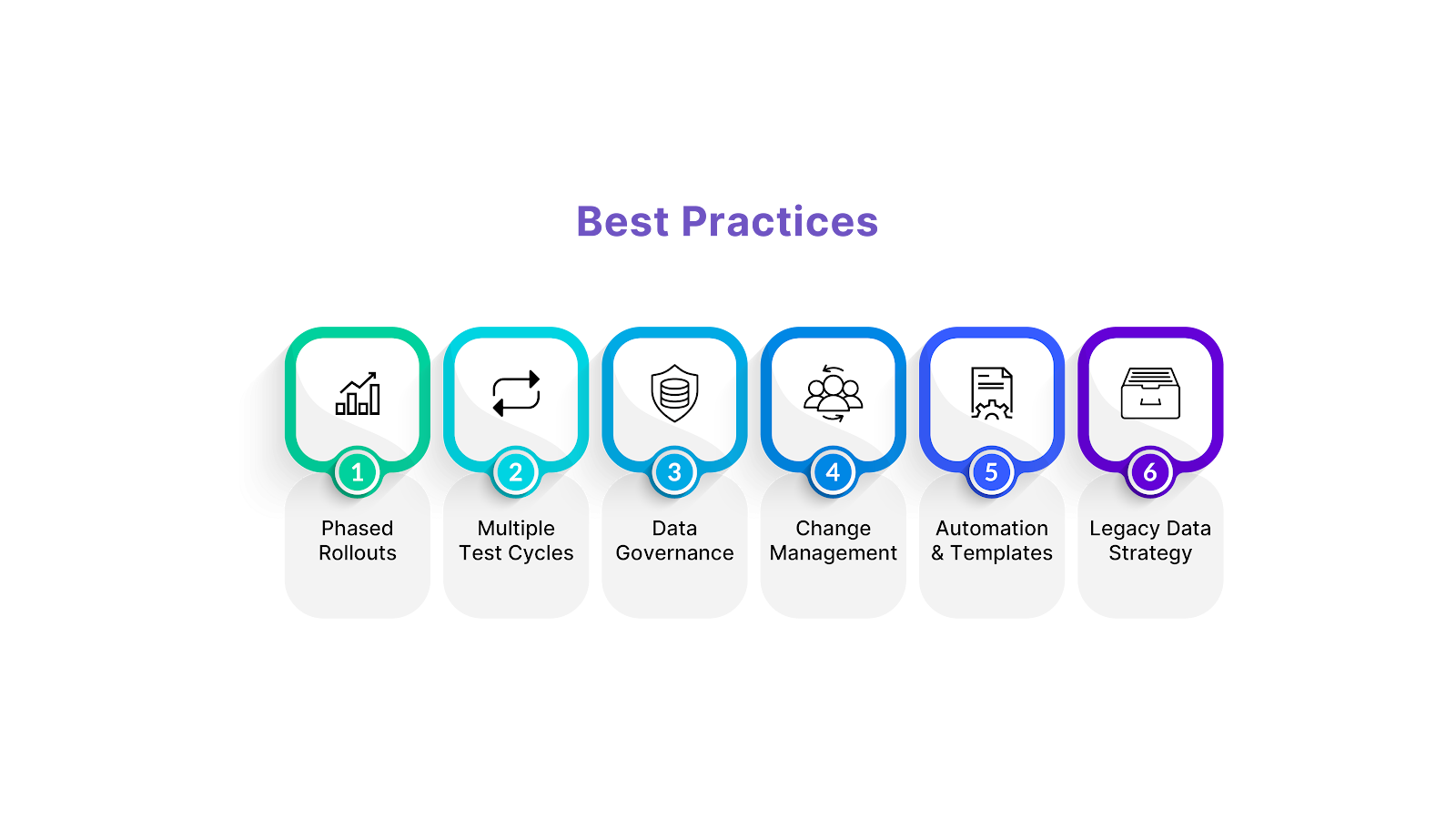
Minimal Start / Phases: Core first, grow—less mess, less chance. You prove value fast, build trust.
Governance Day 1: Owners, stewards, metrics—stick. Tools like dataZen keep it. No drift later.
Legacy Plan: Archive, read-only, or live—meet rules. Save storage, stay legal.
Flex/Hybrid: Parallel runs? Sync data. Plan it. Smooth overlap if needed.
Real Costs/Time: Buffer big. Vendor speed (ChainSys) helps—no shock bills.
Post-Live Care: Watch KPIs, satisfaction. Tweak, add AI later. The system gets better monthly.
Using ChainSys: What a CIO Should Know / Checklist
Given ChainSys’s platform, here’s a checklist to help align internal readiness if you are considering ChainSys as part of your migration solution.
Area
Questions to Ask / Check
Template Coverage
Does ChainSys have templates for all the needed source objects from Dynamics 365 (master data, transactional, historical)? How many will you need to customize vs reuse?
Data Quality Tooling
What are the tools for cleansing, deduplication, validation, and governance (e.g., ChainSys dataZen, etc.)? What is the workflow for approval?
Integration into Oracle Tooling
How will the migration loads happen? Via Oracle’s FBDI (File-Based Data Import), Web Services, and other APIs? Are there connectors/adapters in place?
Governance & Metadata
How is metadata, lineage, and reconciliation handled? Are dashboards available? Who owns data stewardship?
Security & Compliance
How is sensitive data handled (masking, etc.)? What certifications or compliance frameworks are supported?
Scalability & Performance
Can the tool handle large volumes / multiple countries / many legal entities? What has been demonstrated in past case studies? (ChainSys has done migrations across many objects, countries, etc.)
Support & Change Management
What support is available from the vendor/partner? What training offerings? What about documentation, user acceptance, etc.?
Cost & ROI
Total cost: licenses, partner fees, internal resource cost, training, and change management. What will be the savings (maintenance, efficiencies) over time? How long to pay back?
Sample Case / Learnings from ChainSys
In “A Complex Data Migration from Legacy Systems to the Cloud”, ChainSys used dataZap to migrate over 30+ data objects across many countries & multiple source systems. Key was using pre-configured templates, strong transformation logic, and data cleansing via dataZen. The result: regional rollouts were faster; business data quality significantly improved; reusability of templates helped with phased rollouts.
InChainSys’s Oracle Cloud Implementation service, they describe an iterative/incremental approach using Oracle Unified Methodology (OUM) rather than waterfall; early configuration & prototyping to help business users visualize the target system early.
Lessons from those:
Reusability of templates accelerates subsequent rollouts/regions
Early involvement of functional teams helps clarify transformations needed
Cleaning master data before large migrations saves enormous downstream cost and rework
Phased/hybrid approaches can reduce risk
CIO-Focused Risks & How to Address
As CIO you should watch for the following risks and proactively manage them:
Budget Overruns Ensure robust estimates; include buffer; monitor via milestones. UseChainSys tools to reduce uncertainty.
Underestimated Data Complexity Many organizations find unexpected data quality or mapping issues. Mitigate via early discovery, pilot migrations, and data profiling.
Resistance from Business / Users Users are reluctant to change. Ensure stakeholder engagement; provide training; show benefits.
Migration Delays / Operational Disruption** Avoid large untested cutovers; plan downtime; have a rollback; support parallel operations as needed.
Regulatory or Legal Compliance Gaps Data residency, privacy, tax/local law differences may be missed. Include legal teams early; audit the target configuration; ensure data lineage/tracking.
Integration / Dependencies Overlooked** Third-party add-ons, reporting, and custom code might break or not port. Ensure complete inventory; plan to test in sandbox; consider building modern APIs or middleware.
Metrics & Success Criteria
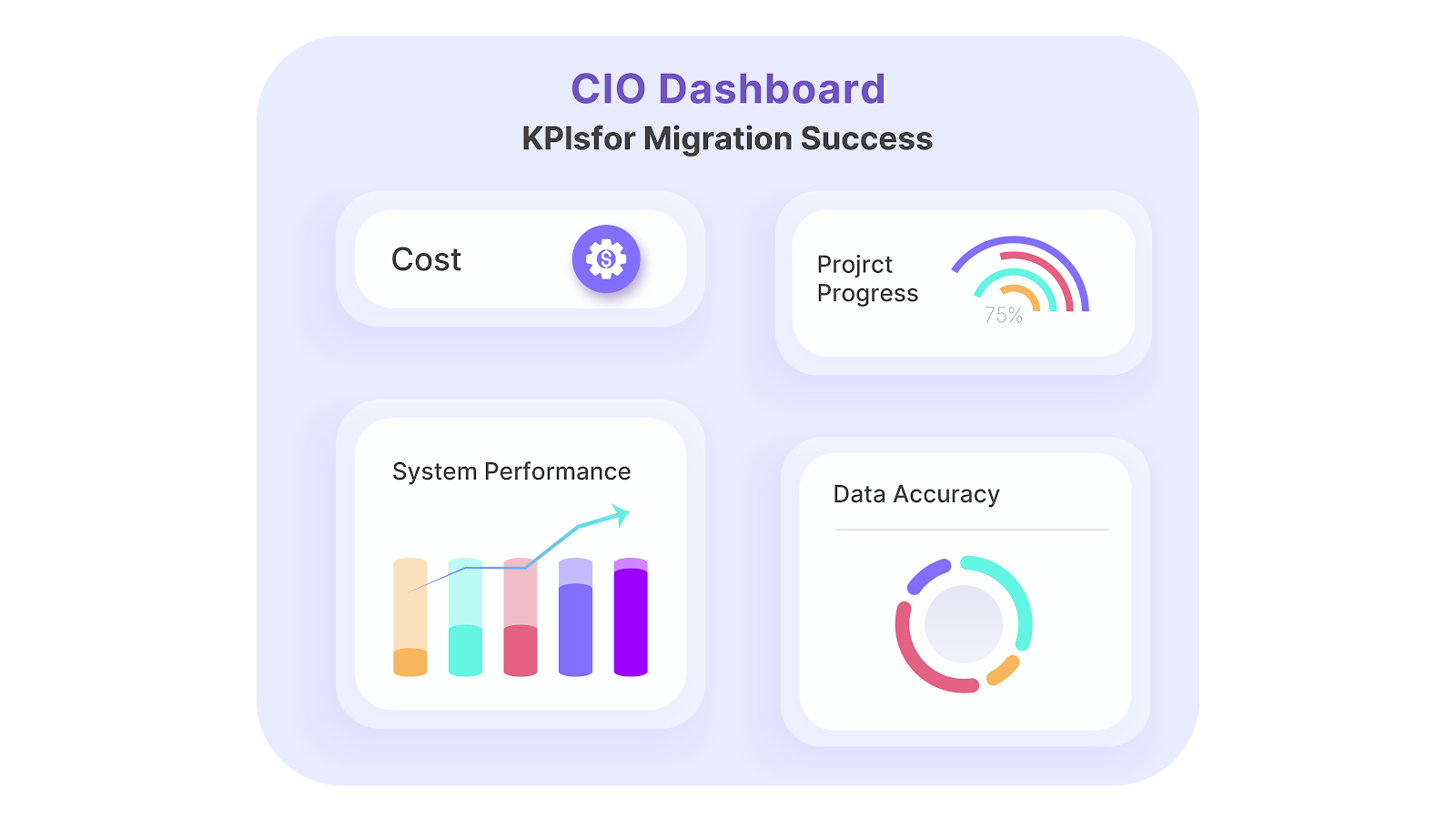
To measure whether the migration is truly successful, define clear metrics. For example:
Data accuracy post-migration (percentage of errors, mismatches, etc.)
Time to go live vs planned timeline
Total cost vs budget (including internal & external)
System performance & usability (response times, user satisfaction)
Reduction in maintenance overhead (customizations, integrations, patches)
Business impact: faster reporting, better analytics, reduced manual overhead, better decision making
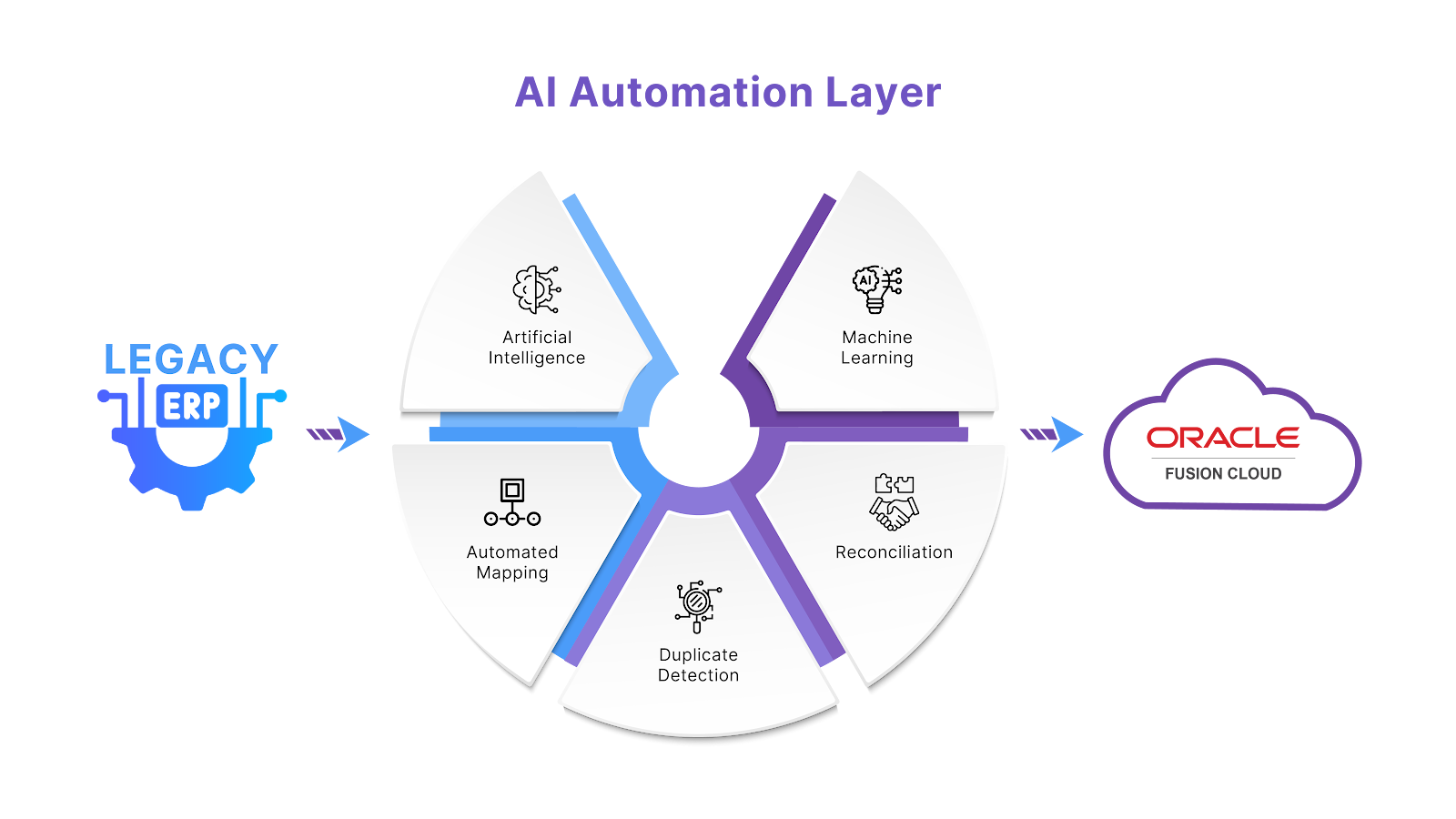
ChainSys incorporates these with metadata-driven automation, helping CIOs reduce risk and shorten timelines.
Conclusion
Migrating from Microsoft Dynamics 365 to Oracle Fusion Cloud is a transformative step that requires CIO-level vision, rigorous planning, and the right tools. By leveraging governance, automation, and a structured roadmap, CIOs can achieve faster go-lives, cleaner data, and sustainable ERP modernization.
ChainSys brings proven templates, automation platforms, and governance frameworks to simplify the journey and ensure CIOs deliver both technical and business value from migration. Dive deeper withChainSys whitepapers, case studies, and technical documentation.