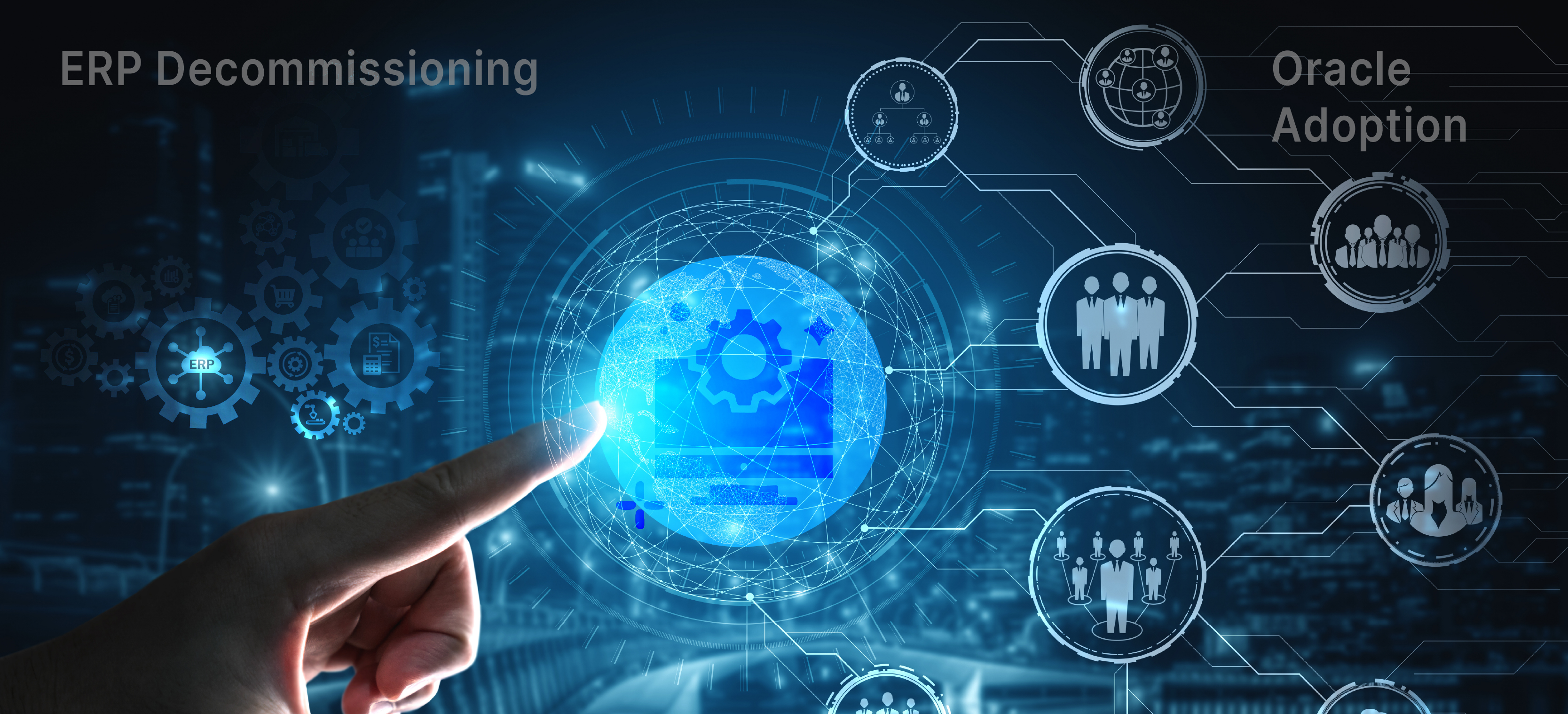
We all know the score. That old Syteline ERP system—a true workhorse—has held the operational core of your manufacturing business together for years, perhaps even decades. It was the backbone of a different business world. But today, with global supply chains fracturing overnight and digital intelligence becoming the non-negotiable driver of competitive advantage, the limitations of Syteline are starkly visible and increasingly expensive. What once felt like a stable platform is now unequivocally holding your enterprise back.
The global manufacturing sphere has undergone a profound transformation. The industry is deep into a comprehensive modernization shift, moving decisively away from rigid, captive on-premise systems toward intelligent, scalable, and cloud-native platforms. The transition to the cloud is no longer a future concept—it is a present-day mandate. For manufacturers seeking a real leap forward, the time for ERP modernization—specifically, a high-impact move to Oracle Fusion Cloud ERP—is now.
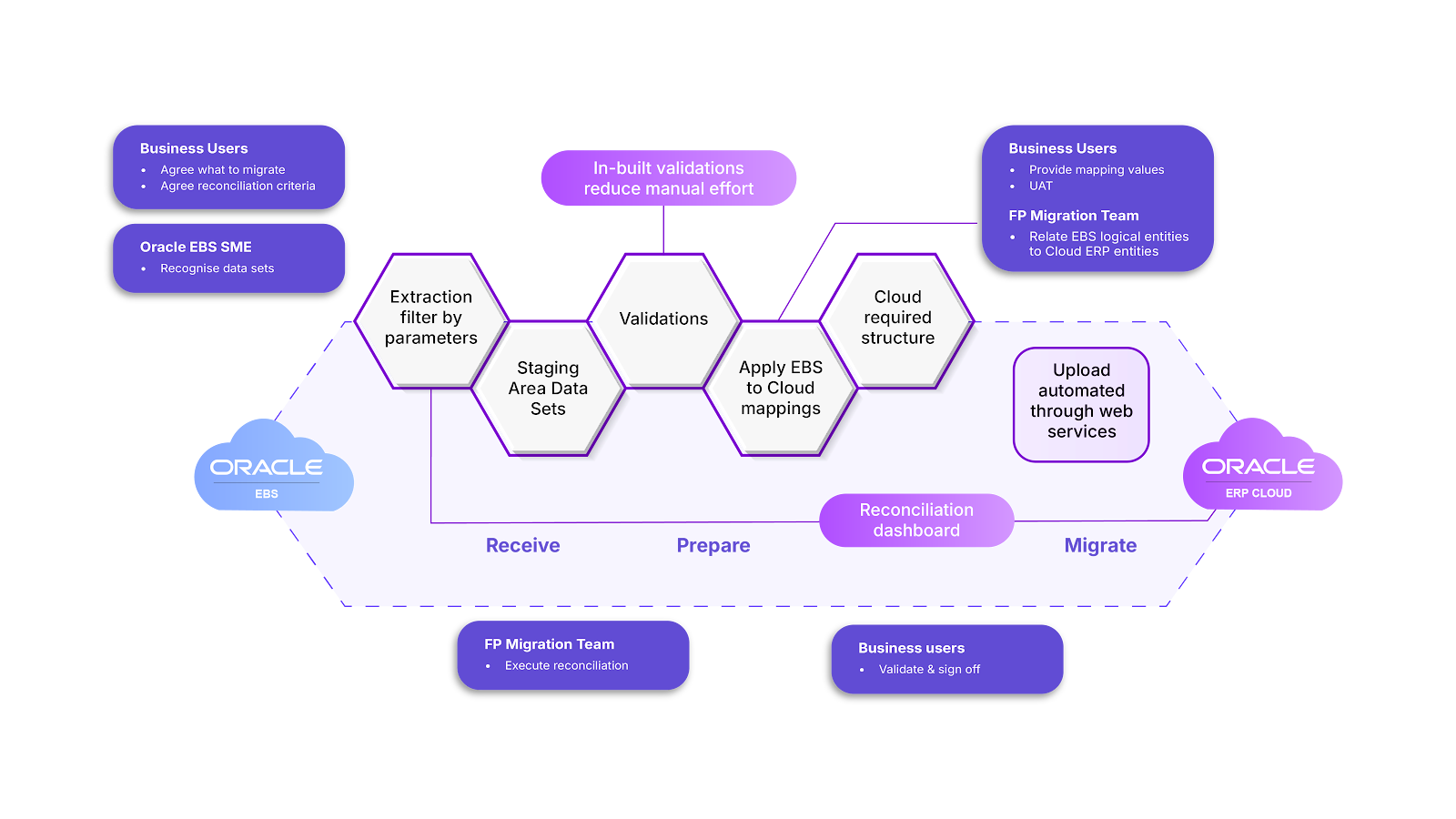
At ChainSys, we understand this journey is far more profound than a technical switch. It fundamentally reshapes how data flows, how decisions are made, and how global teams collaborate. We’ve personally supported complex Syteline-to-Oracle migrations, including a significant program for an energy-sector provider, migrating data across 17 countries and 74 legal entities using ChainSys dataZen, ChainSys dataZap, and governed automation throughout the entire lifecycle.
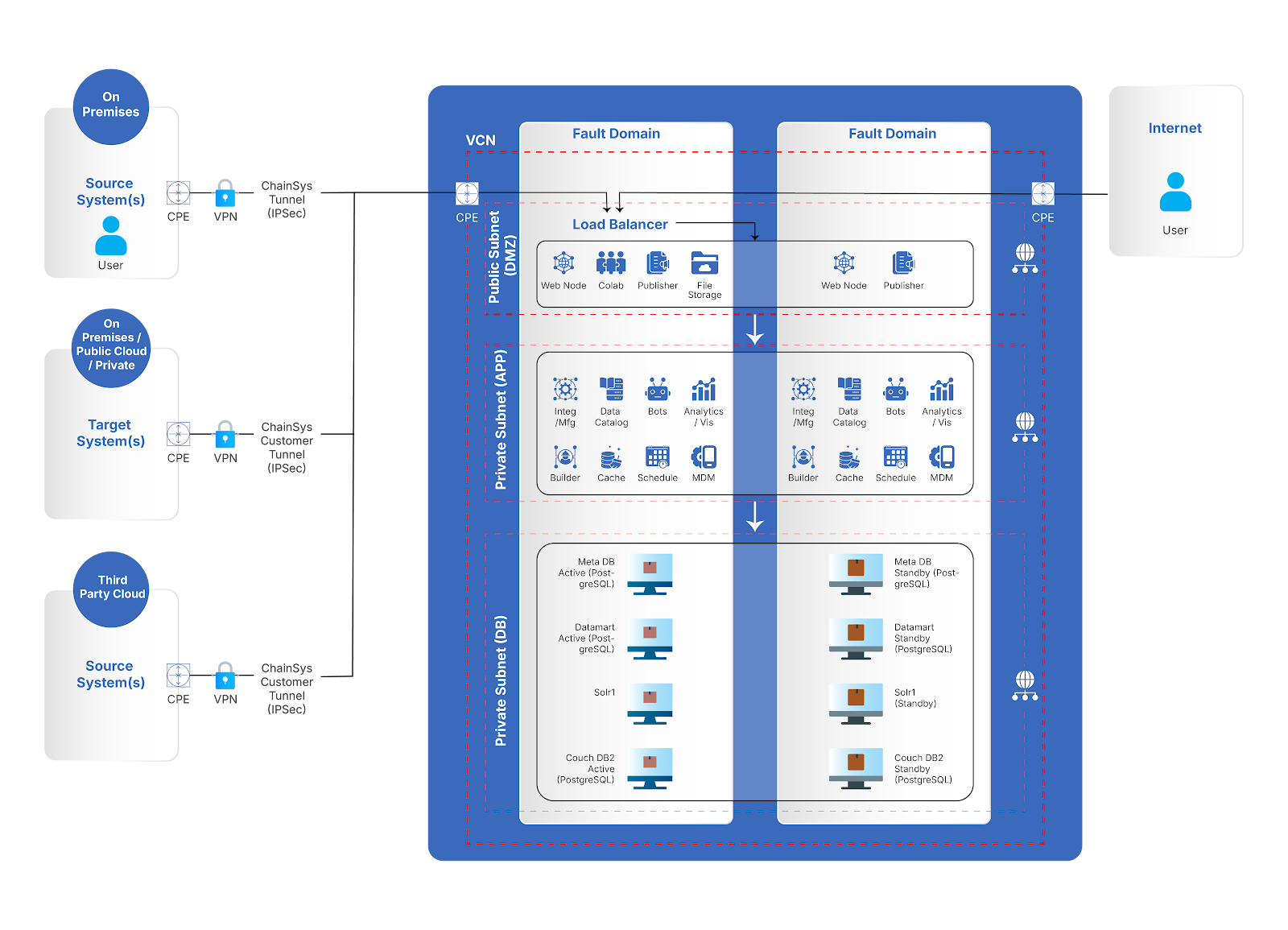
The decision to decommission Syteline isn't about discarding a comfortable system; it’s about strategically positioning your entire enterprise to win in the future.
Syteline was engineered for an entirely different business climate—one characterized by stable demand cycles, slower rates of process innovation, and highly predictable markets. Today’s operating environment, however, demands real-time, instantaneous insights, deeply hyper-connected supply chains that can react in hours, automated workflows, and optimization driven by embedded AI.
Under the old Syteline framework, upgrades are notoriously complex, system integrations are deeply constrained, and the long-term maintenance of specific customizations becomes prohibitively expensive.
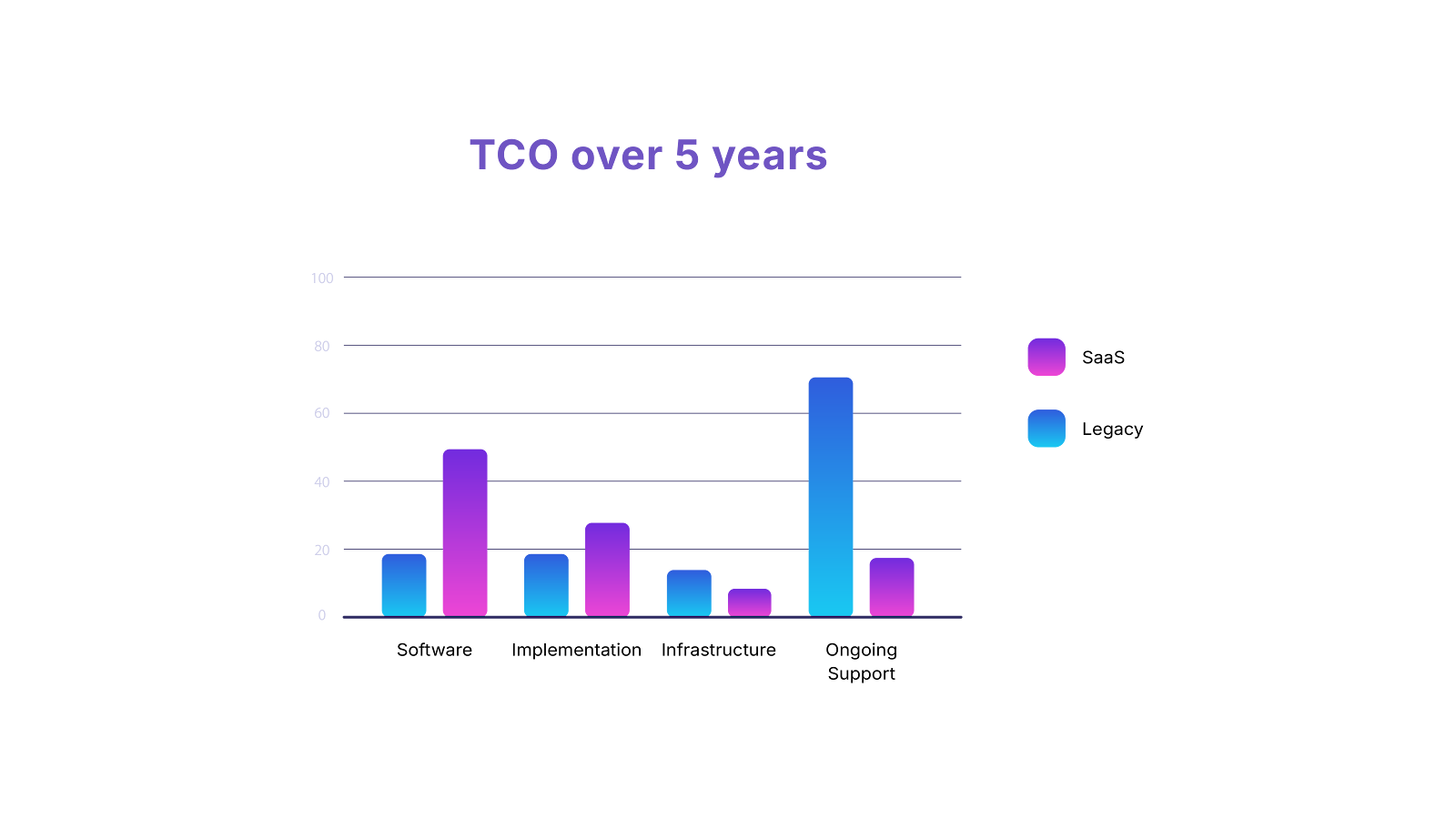
Manufacturing companies that remain tied to these legacy on-premise systems face a specific set of operational handicaps:
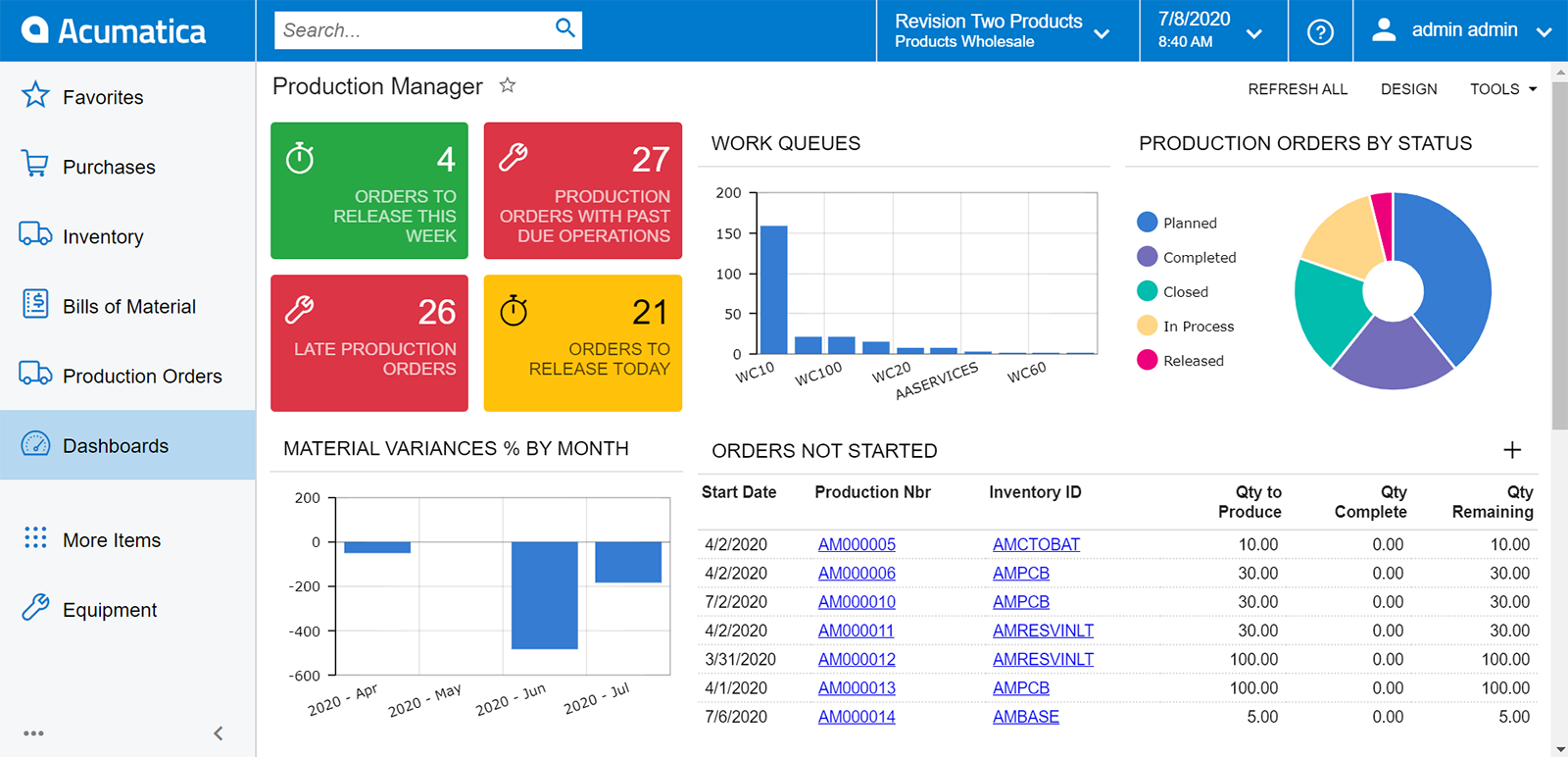
Conversely, the business advantages conferred by Oracle Cloud adoption are immediate and transformative, sparking excitement and optimism. Oracle Fusion Cloud offers unified operational visibility, natively embedded analytics and automation, robust supply chain orchestration tools, and a dramatically reduced Total Cost of Ownership (TCO). The real, lasting ROI is realized not simply by eliminating technical debt, but by directly empowering smarter, faster, and genuinely more connected organizational decision-making.
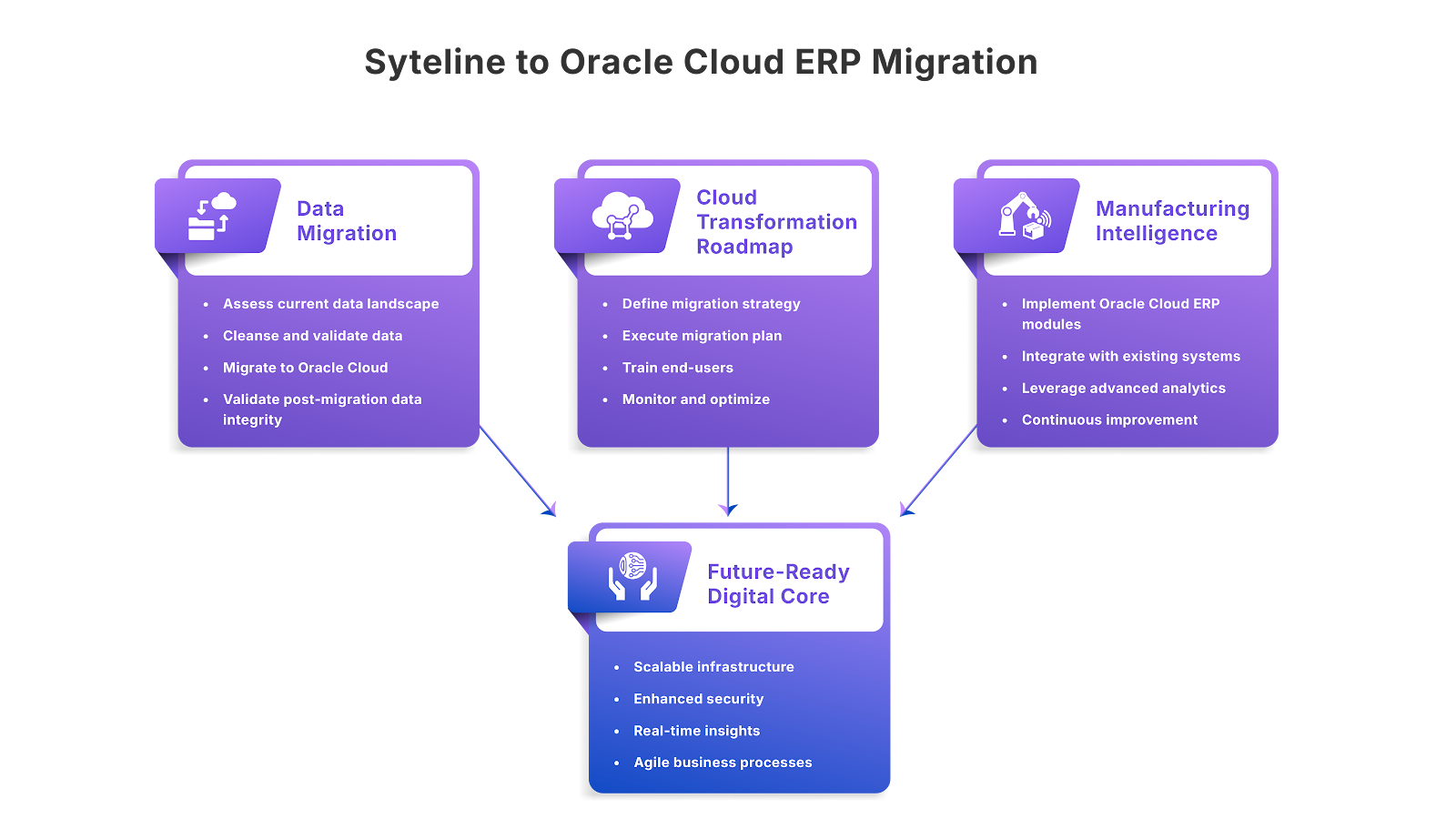
In essence, the question for every manufacturing executive is no longer should we leave Syteline, but precisely how to execute the exit with maximum control and the lowest possible risk.
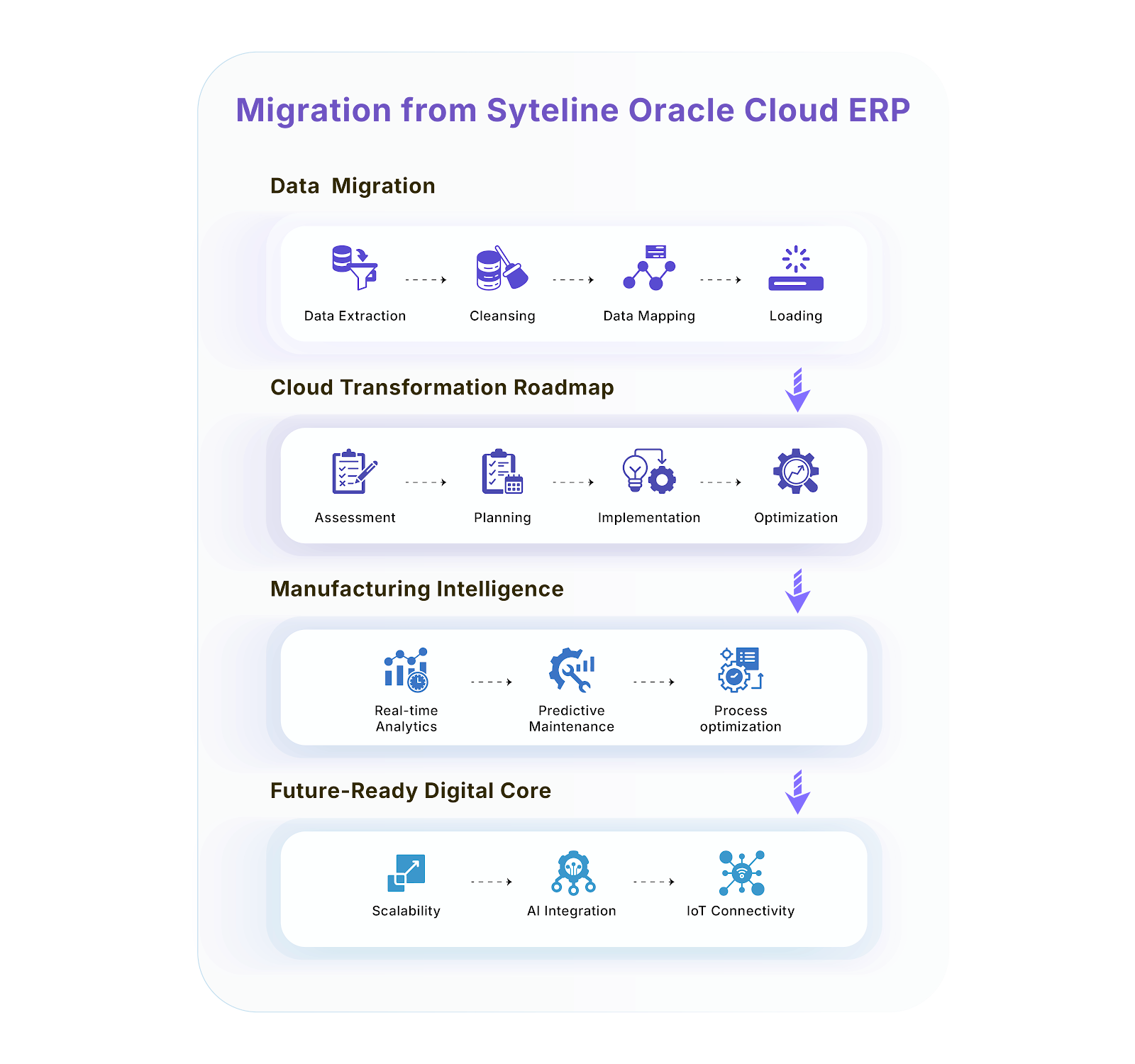
Drawing on decades of complex modernization expertise, ChainSys employs a disciplined, proven roadmap to help manufacturers transition from Syteline to Oracle Fusion Cloud. This process is designed to be secure, rapid, and executed with absolute confidence in data integrity.
The 4-Phase Cloud Transformation Roadmap includes:
Phase 1-The Decommissioning Blueprint,
Phase 2-Data Migration,
Phase 3-Functional Mapping, and
Phase 4-Post-Migration Support.
Planning the Sunset
Before you can even begin laying the foundation for a new cloud platform, you must formally and legally plan the comprehensive retirement of Syteline, paying meticulous attention to compliance, operational continuity, and data traceability.
A complete, compliant Syteline ERP decommissioning strategy must address several key areas:
Regulatory, audit, and long-term financial requirements mandate that all historical transactional data must be retained securely and accessible. Simply powering down Syteline is never a viable option. A robust, compliant archiving solution ensures:
Strategic Functional Mapping
Our expert team conducts a granular evaluation of your current Syteline modules and maps their functions one-to-one with the corresponding Oracle Fusion Cloud applications. This essential work prevents project scope creep, ensures user functionality remains intact, and delivers a realistic, outcome-driven Oracle Cloud adoption roadmap.
Manufacturing ERP data is recognized as one of the most complex in the entire enterprise world. It encompasses multi-level Bills of Material (BOMs), detailed routings, particular WIP transactions, costing layers, and decades of order history. Manual migration methods are simply incapable of handling this scale and complexity.
Data preparation for Oracle Fusion Cloud must be an early and aggressive focus. Manufacturers invariably discover deep-seated issues in legacy data:
ChainSys ensures your source data is meticulously profiled, aggressively cleansed, thoroughly validated, and perfectly aligned with Oracle’s demanding, structured data model—all before the data loading phase even begins, as demonstrated in our energy sector case, where dataZen was used for master data governance.
Manually mapping and transforming decades of Syteline data introduces crippling delays and inevitable inaccuracies. Utilizing ChainSys’ automation platform means:
Our Oracle Fusion Cloud migration automation tools mitigate risk, eliminate the complexity of manual data handling, and provide repeatable, fully auditable processes for the entire data lifecycle, much like the dataZap deployment in our global EPCI provider project that unified operations across 54 countries.
The ERP modernization effort is not complete at go-live; it succeeds only when every user in the organization consistently and confidently adopts the new system into their daily tasks.
A precisely tailored Cloud adoption framework is vital for ensuring your workforce fully understands and embraces the new operational platform. This framework must clearly communicate:
Oracle Fusion Cloud operates on a model of continuous, quarterly updates—meaning the system is constantly evolving. To fully leverage this agile landscape, your internal teams must be prepared to:
ChainSys actively helps organizations establish the long-term governance and agility needed to capitalize on these quarterly changes fully.
The initial migration is merely the starting line. The actual, strategic benefits of cloud ERP modernization emerge when organizations fully activate the transformative power of the integrated Oracle Fusion applications.
Expected, measurable business outcomes typically include:
Manufacturers who undertake this modernization with an experienced, specialized partner gain not just a new system, but a future-ready digital core that possesses the inherent capability to scale, innovate, and compete aggressively for years to come, as seen in our Oracle Cloud transformations detailed at https://www.chainsys.com/case-studies.
Retiring Syteline and successfully adopting Oracle Fusion Cloud are strategic, mission-critical milestones—one that demands precision, specialized expertise, and the right automation partner. ChainSys provides the necessary tools, the proven framework, and the essential Oracle migration automation to make your crucial transition predictable, fully audit-ready, and high-impact.
Your modernization journey starts today. Connect with our specialists at ChainSys and begin mapping your future-ready ERP landscape. For technical docs on our tools, such as dataZap, visit docs.chainsys.com.